Artificial intelligence is changing how people plan, design, and visualize interior spaces. From AI-powered room planners to smart home design tools, the technology is now helping designers, homeowners, real estate companies, and architects create spaces faster and more efficiently.
The industry is also growing quickly as more consumers use AI apps for layout planning, furniture placement, virtual staging, and personalized room designs. At the same time, businesses are using AI to shorten project timelines, improve the customer experience, and reduce design costs.
To create this listicle roundup, we conducted deep online research and collected statistics from trusted industry reports, research firms, business publications, and technology platforms.
For better transparency and verification, all data sources and references are attached at the end of the article.
In this article, you will find the latest AI in interior design statistics for 2026, including market growth, adoption rates, consumer behavior, productivity improvements, smart home trends, and future industry predictions.
Quick Glance: Top AI Interior Design Statistics
- The global AI interior design market crossed $3.2 billion in 2025 and may exceed $15 billion by 2033.
- AI powered systems can process 3D room models nearly 80% faster than traditional visualization methods.
- Nearly 78% of users report higher satisfaction when using AI generated room layouts and personalized recommendations.
- AI systems process 3D room models nearly 80% faster compared to traditional workflows.
- Around 75% of freelance interior designers now use AI tools to speed up concept generation and client revisions.
- Smart home features now appear in nearly 80% of AI interior design-related searches and queries.
- AI-based workflows can reduce interior design project timelines by almost 30%.
- Nearly 65% of first-time homebuyers use AI tools for furniture placement, room planning, and layout optimization.
- By 2030, around 75% of interior design firms are expected to work with hybrid AI and human design teams.
AI Interior Design Market Size Statistics
Artificial intelligence is becoming a major part of the interior design industry. Companies now use AI tools for room visualization, virtual staging, smart furniture placement, and personalized home planning. Growing consumer demand and faster AI adoption continue to push the market forward across both residential and commercial design sectors.
- The global AI interior design market reached an estimated value of more than $3.2 billion in 2025, showing strong demand for AI-powered design tools across the industry.
- Industry reports predict that the AI interior design market could cross $15 billion by 2033 as more businesses adopt automation and smart visualization platforms.
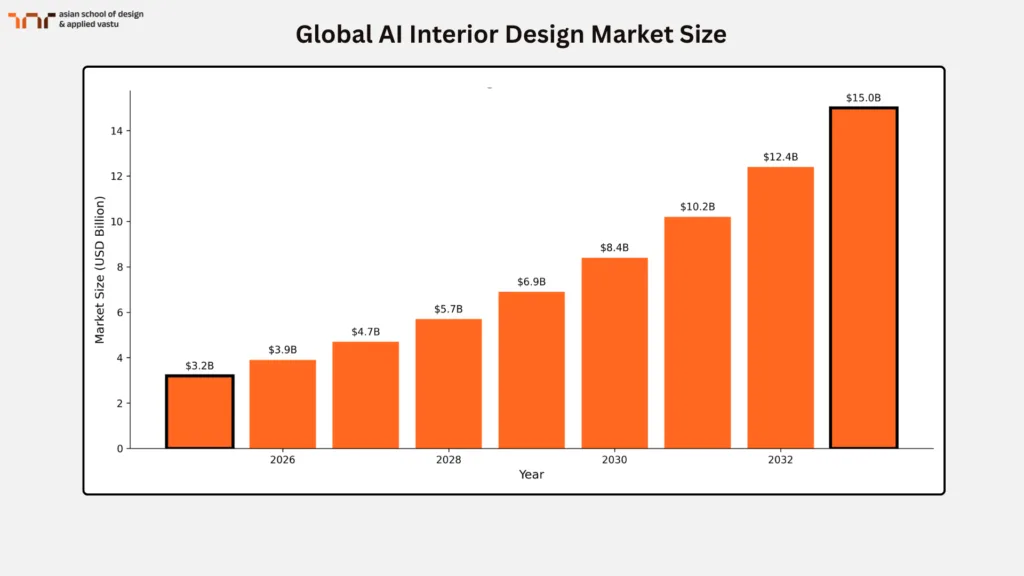
- Researchers expect the global AI interior design industry to grow at a compound annual growth rate of 20.9% between 2026 and 2033.
- The broader generative AI design market is projected to grow from around $1.3 billion in 2026 to nearly $16.9 billion by 2035 due to rising use of AI based creative tools.
- Experts estimate that the generative AI in design industry will grow at a CAGR of 32.75% over the next decade, making it one of the fastest growing technology sectors.
- The Asia Pacific AI interior design market generated nearly $450 million in revenue and continues to grow due to urbanization and smart home adoption.
- The commercial AI interior design segment is expected to grow at a CAGR of 27%, while the residential segment may grow at 22% through the next decade
AI Adoption Statistics in Interior Design
Interior designers, architects, and design companies are adopting AI tools faster than ever before. Many professionals now use artificial intelligence for layout generation, space planning, visualization, client presentations, and workflow automation. Businesses are also adding AI powered services to stay competitive and improve project efficiency.
- AI adoption among designers increased from 9% in 2023 and is expected to reach nearly 29% as more professionals start using AI powered design tools in daily workflows.
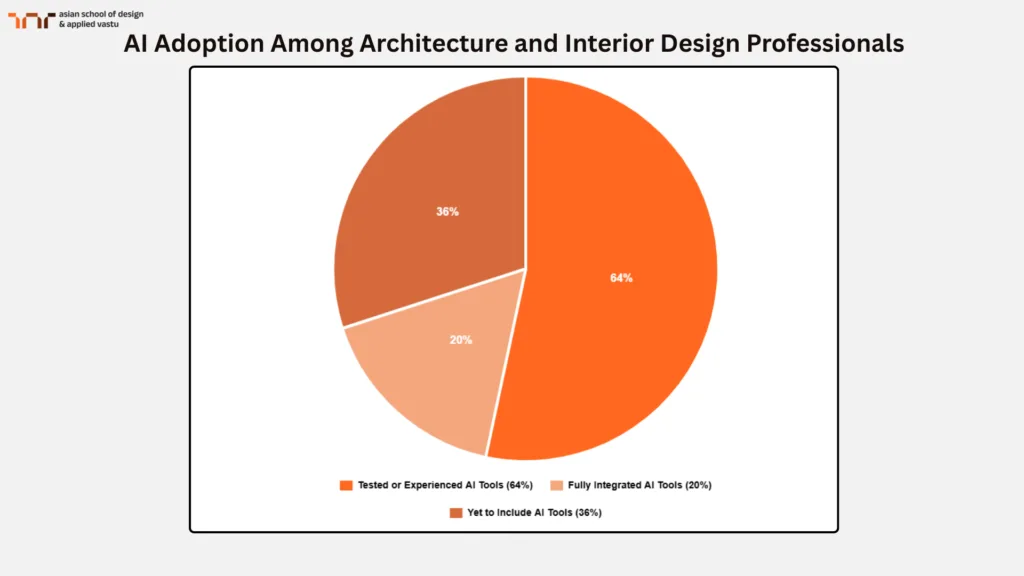
- By early 2026, around 64% of architecture and interior design professionals had already tested or experimented with AI tools, although only 20% had fully integrated them into their regular operations.
- Around 35% of interior design firms now actively use AI tools, compared to only 12% in 2021, showing how quickly the technology is entering the industry.
- More than half of interior design companies now offer AI enhanced services to clients, including virtual room previews, automated layouts, and AI generated concepts.
- Freelance interior designers are also adopting AI rapidly, with nearly 75% already using AI tools to speed up design tasks and client work.
- Enterprise adoption of B2B AI interior design solutions increased by 32% as larger businesses invest more in automation, smart visualization, and AI powered planning systems.
Consumer Behavior and User Preference Statistics
Consumers are now using AI interior design tools to plan rooms, test layouts, compare styles, and create personalized spaces before making buying decisions. AI also helps users save time, reduce costs, and visualize ideas more easily during home renovation and decoration projects.
- Users report nearly 78% higher satisfaction levels when they use AI customized room designs and personalized layout suggestions.
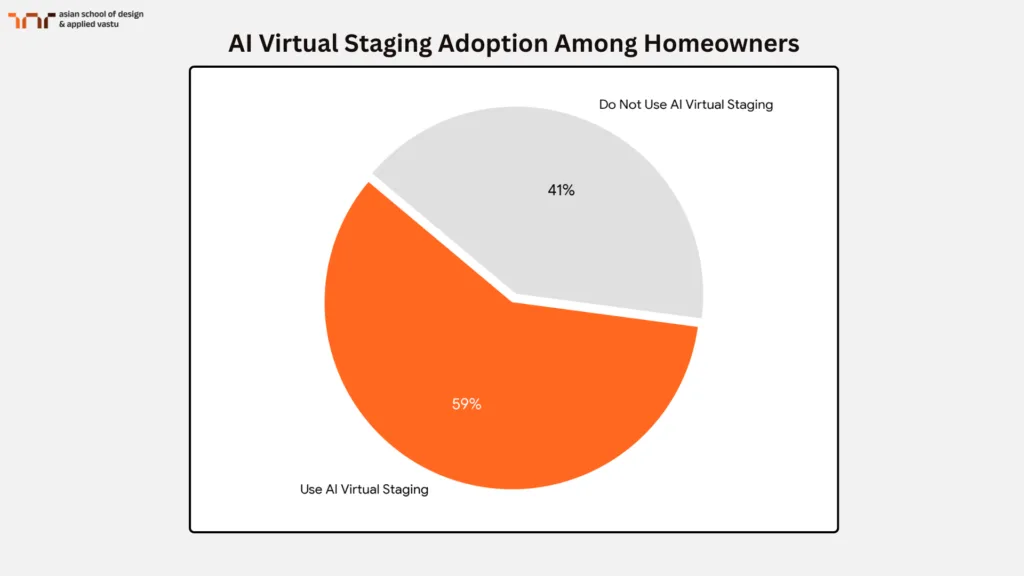
- Around 59% of homeowners use AI powered virtual staging tools because they offer more budget friendly interior visualization options.
- Sustainable design recommendations generated through AI are preferred by around 65% of consumers compared to traditional design planning methods.
- AI tools are now used by almost 65% of first time homebuyers for layout planning, furniture arrangement, and room optimization.
- Before purchasing furniture or redesigning spaces, nearly 61% of millennials prefer viewing AI generated room previews and concepts.
- Property values can increase by nearly 15% when homes use AI optimized interior designs that improve space presentation and personalization.
AI Interior Design User Demographics Statistics
Younger consumers are driving the growth of AI interior design platforms. Gen Z and millennials use AI apps for room inspiration, virtual decoration, furniture planning, and social media sharing much more than older age groups.
- Nearly 68% of homeowners between the ages of 25 and 34 have already tried AI powered interior design apps for home planning and decoration.
- Weekly experimentation with AI design tools is common among Gen Z users, with around 70% actively testing AI generated room ideas through mobile apps.
- More than 55% of Gen Z consumers now prefer AI generated room concepts over traditional interior design methods for faster inspiration and personalization.
- In the past year alone, AI interior design applications were used by nearly 68% of millennials for home improvement and layout visualization.
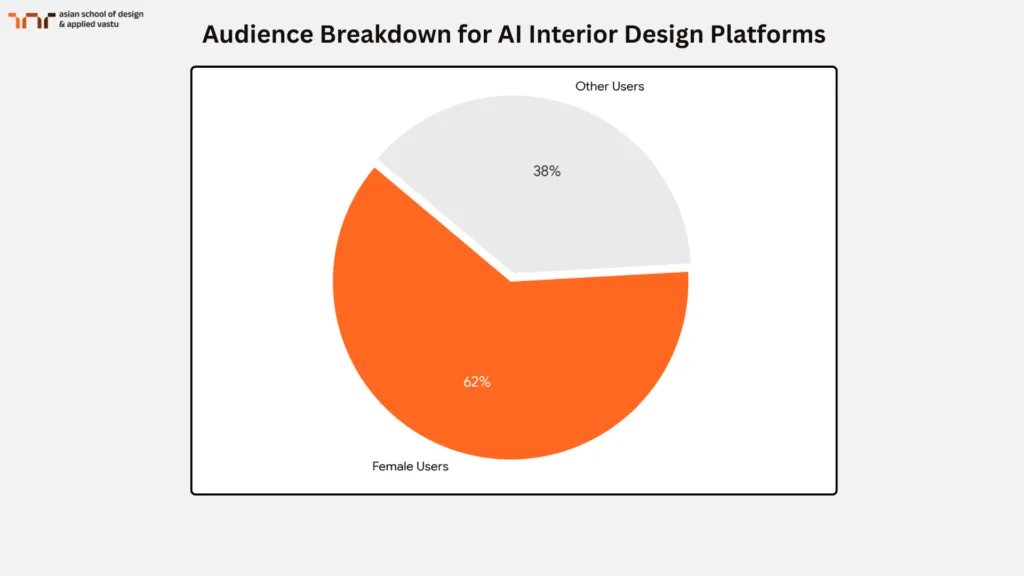
- Female users represent around 62% of the audience for AI interior design platforms and room planning applications.
- AI generated room designs are frequently shared online, and nearly 74% of users post their generated concepts on social media platforms.
- Minimalist interior styles dominate AI design requests, with about 55% of generated room concepts focusing on clean and simple layouts.
AI Productivity and Workflow Statistics
AI tools are helping interior designers complete projects faster and more efficiently. From automated layouts to instant visual previews, artificial intelligence is reducing manual work and improving design accuracy across residential and commercial projects.
- AI powered workflows can shorten interior design project timelines by nearly 30% through faster planning, automation, and visualization.
- What once took almost two weeks in the design process can now be completed in nearly two hours with the help of AI based iteration tools.
- Freelance interior designers report around 40% time savings after adopting AI tools for concept generation, editing, and client revisions.
- Compared to traditional methods, AI powered systems can process 3D room models nearly 80% faster during visualization and rendering tasks.
- Modern machine learning systems are capable of processing nearly 1 million design variations every second to generate faster layout recommendations.
- Hotel brands using AI for room redesign and planning have achieved almost 30% faster project turnaround times.
- Design related insurance claims have dropped by nearly 18% after companies started using AI tools to improve planning accuracy and reduce errors.
- Multi modal AI systems that combine images and text can improve design personalization by almost 75% for users and businesses.
AI Revenue and Business Impact Statistics
AI is creating new business opportunities across the interior design industry. Companies are using AI tools to increase revenue, improve customer experience, automate services, and build subscription based design platforms for both businesses and consumers.
- Interior design firms that use AI tools report an average revenue increase of nearly 28% through faster project delivery and improved client services.
- Premium AI features now contribute around 60% of total subscription revenue earned by many interior design applications and platforms.
- Revenue from mobile AI interior design apps increased by almost 50% as more consumers started using design tools directly from smartphones and tablets.
- In 2025, AI design solutions accounted for nearly 60.1% of the market as businesses invested heavily in software platforms and automation tools.
- Cloud based deployment dominated the industry with around 69.5% market share because companies prefer scalable and remote AI design systems.
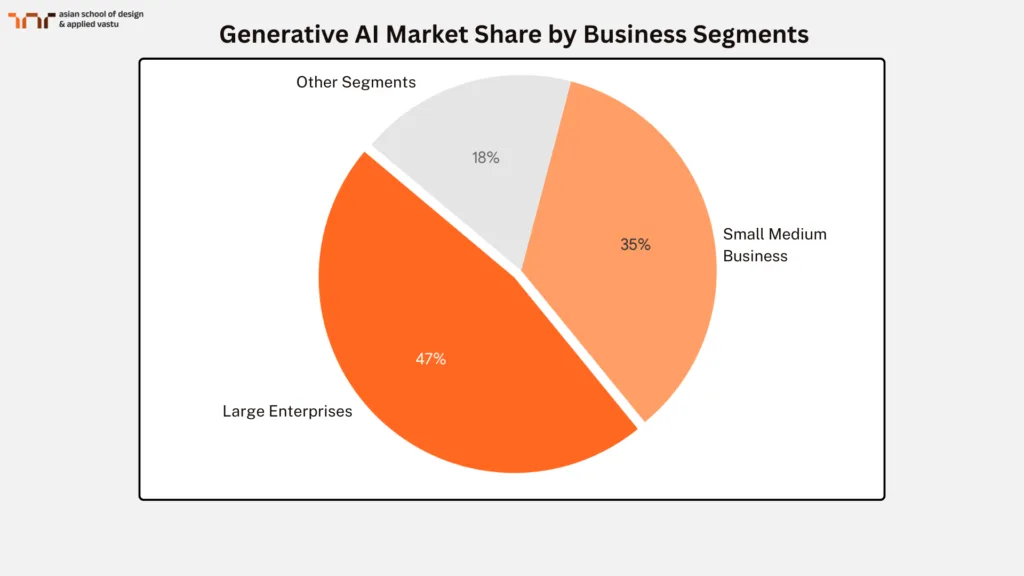
- Large enterprises held nearly 47% of the generative AI design market, while small and medium businesses contributed around 35% of total market share.
- The AI interior design ecosystem created nearly $500 million worth of new jobs by 2025 across software, visualization, architecture, and digital design services.
Smart Home and Sustainability Statistics
AI is also changing how people create smarter and more sustainable living spaces. Many interior design platforms now focus on eco friendly materials, smart home integration, immersive previews, and personalized room environments to improve both comfort and efficiency.
- AI based sustainability tools can reduce material waste by almost 25% by improving space planning and product recommendations.
- Biophilic interior design trends have grown by nearly 40% as AI tools increasingly recommend natural lighting, indoor plants, and nature inspired layouts.
- Around 75% of AI generated interior design images now rely on GAN based models to create more realistic room concepts and visual outputs.
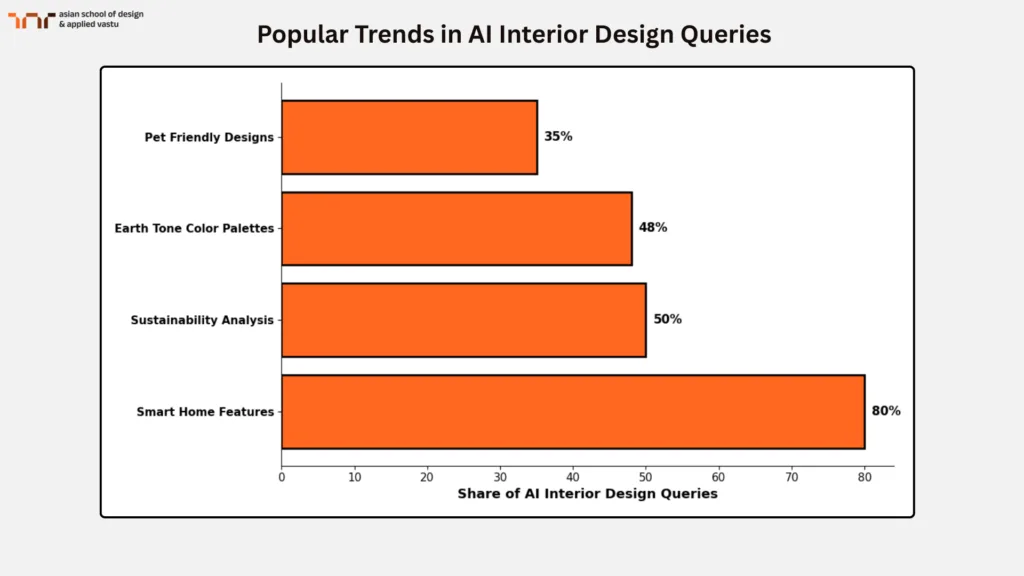
- Smart home features are now part of nearly 80% of AI interior design queries as consumers increasingly look for connected and automated living spaces.
- Around 50% of AI interior design platforms now include sustainability analysis features to help users choose more eco friendly materials and layouts.
- Earth tone color palettes appear in around 48% of AI generated room simulations because users continue to prefer warm and natural interior aesthetics.
- Pet friendly room designs are now requested in nearly 35% of AI design interactions as homeowners focus more on functional living spaces for pets.
- Immersive previews are becoming more common, with around 60% of AI interior design platforms now using virtual reality features for room visualization.
Regional and Future AI Interior Design Statistics
AI interior design adoption is growing across different regions worldwide. North America currently leads the market, while Asia Pacific is expanding rapidly because of rising urbanization, smart home demand, and increased technology adoption. Future trends also show that AI will become a standard part of interior design workflows over the next few years.
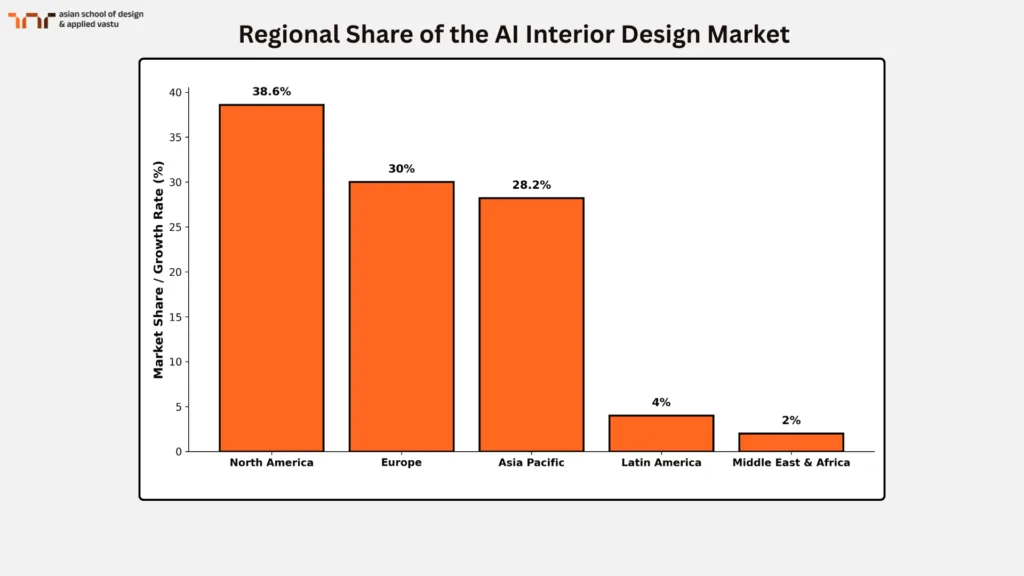
- North America accounted for nearly 38.6% of the global AI interior design market revenue in 2025, making it the largest regional market worldwide.
- Asia Pacific is expected to record the fastest growth rate of around 28.2% through 2030 as smart cities and digital home technologies expand across the region.
- Within the generative AI design market Europe contributes nearly 30% of total revenue.
- Latin America represents around 4% of the generative AI design market, while the Middle East and Africa account for nearly 2% of the global share.
- By 2030, nearly 75% of interior design firms are expected to work with hybrid teams where human designers collaborate directly with AI systems.
- Industry experts predict that holographic room previews could become a standard feature in nearly 50% of AI interior design applications by 2028.
💡 Explore our recent listicle research roundups:
- 30+ Interior Design Statistics That Matter
- 🌐 130+ Interesting eLearning Statistics
- 75+ Smart Home Statistics Covering Trends and Usage
- 50+ Architecture Statistics You Should Know
Build Real World Interior Design Skills with ASDAV
From smart room planning and virtual staging to faster project execution and personalized home layouts, AI tools are helping both businesses and consumers design spaces more efficiently. As adoption continues to grow, AI will likely become a standard part of modern interior design workflows across residential, commercial, and smart home projects.
If you want to build practical interior design skills and learn how modern technologies are shaping the industry, platforms like ASDAV offer some of the best online interior design courses and certifications for aspiring designers, architects, and creative professionals.
Some of the most popular programs include:
- SketchUp and Lumion for Interior Design Course
- Professional Interior Design Certification Course
- Interior Design Course in Delhi
- Vastu and Space Planning Programs
- Portfolio Building and 3D Visualization Training
ASDAV focuses on practical and industry focused learning with live sessions, real world assignments, portfolio development, and software training. Students can also learn topics like sustainable design, interior styling, rendering, visualization, and accessible design planning.
The platform has also received positive feedback from students and professionals for its practical teaching approach, project based learning, and career focused training programs.
Data Sources
- grandviewresearch.com
- precedenceresearch.com
- mckinsey.com
- asid.org
- pewresearch.org
- cbinsights.com
- hospitalitynet.org
- gitnux.org
- zipdo.co
- technologyreview.com
- apartmentlist.com
- pewresearch.org
- jll.com
- ec.europa.eu
- pwc.com
- marketsandmarkets.com
- statista.com
- wifitalents.com

Jasmine Ahluwalia is a Licensed Architect, Interior designer, Global Vastu consultant and the founder of ASDAV.
She is a graduate of Scuola Master F.lli Pesenti, Politecnico di Milano, and brings strong global exposure through academic learning and professional design projects. Her background combines architecture, interior design, and applied design education.
Before founding ASDAV, Jasmine worked as an assistant professor at Amity School of Architecture and Planning, Amity University Noida. Her research covers sustainable architecture, urban heat island reduction, and circular economy practices in construction. Her work has been published in Scopus indexed and peer reviewed journals as well. She also has strong international on-site experience from countries like Canada, Mauritius, UK, and many more.
Through ASDAV, she has trained more than 500 students across 25 cities. The ASDAV platform has 12+ instructors from IIT, SPA, CEPT and NID , and has delivered over 200 live learning sessions. Her mission is to bridge the gap between design education and real industry expectations, to deliver real growth for her students.
She designs spaces for a living, but her favourite project is designing careers.