Architecture plays a key role in how people live, work, and use spaces. Every year, new projects shape cities, homes, and public areas. The industry now focuses on better design, smart planning, and efficient use of space. It also adapts to new needs like sustainability and digital tools.
Today, firms look for professionals who understand both design and modern technology. Skills like green building design, digital modeling, and project execution are now important. This shift creates new career opportunities in the architecture field.
In this article, we share important architecture statistics related to market size, trends, technology, and jobs. All data is curated from our online research using data reports and trusted sites. We have added all sources at the end of the article.
Key Architecture Statistics for 2026
- The global architecture market may reach $414.43 billion in 2026 and grow to $622.04 billion by 2034.
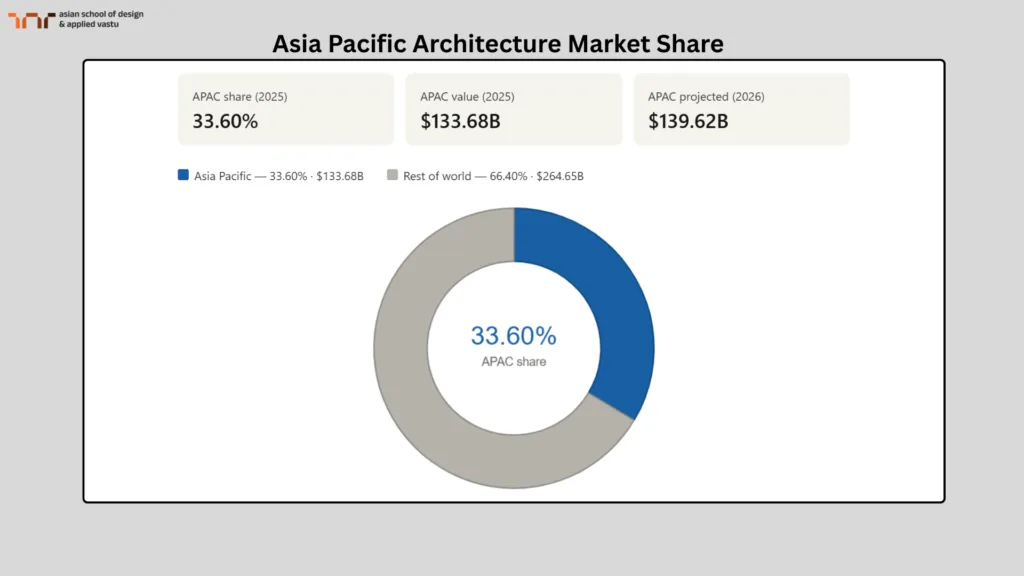
- Asia Pacific holds 33.60% of the global market, making it the largest region.
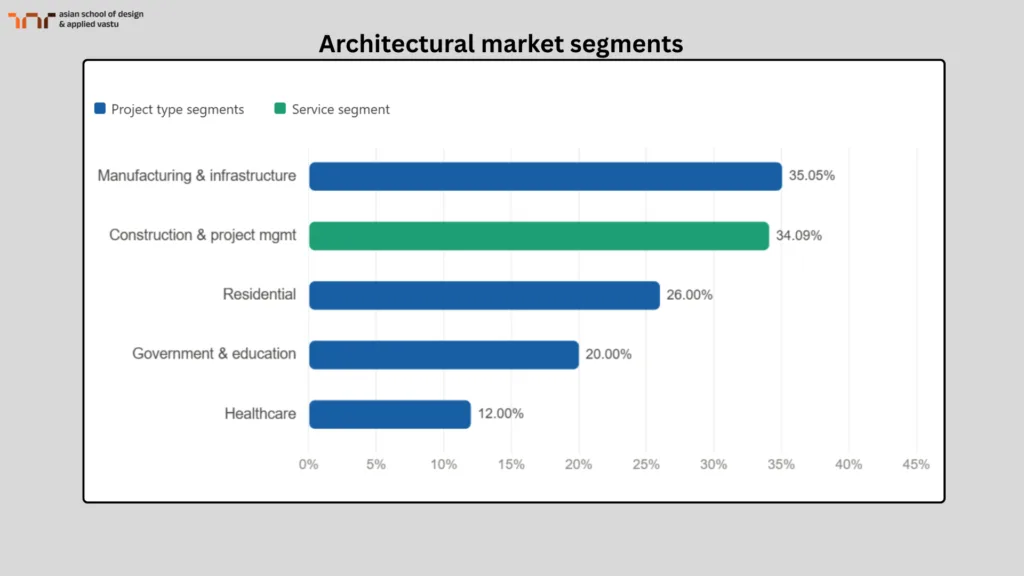
- Manufacturing and infrastructure projects lead demand with 35.05% share.
- Residential projects contribute about 26%, showing strong housing demand.
- Sustainable architecture may reach $1.2 trillion by 2030.
- Modular construction has grown by 30% worldwide.
- Around 75% of large firms use BIM for design and sustainability.
- 80% of architecture firms use cloud tools for collaboration.
- Automation tools reduce design time by up to 40%.
- Energy modeling is used in 85% of sustainable projects.
Architecture Industry Market Size and Growth
The architecture industry has a large market value and continues to expand every year. Growth comes from urban development, infrastructure projects, and rising demand for modern buildings. Regions like Asia Pacific and the Middle East play a key role in this expansion. New areas like sustainable and modular design also add strong future growth.
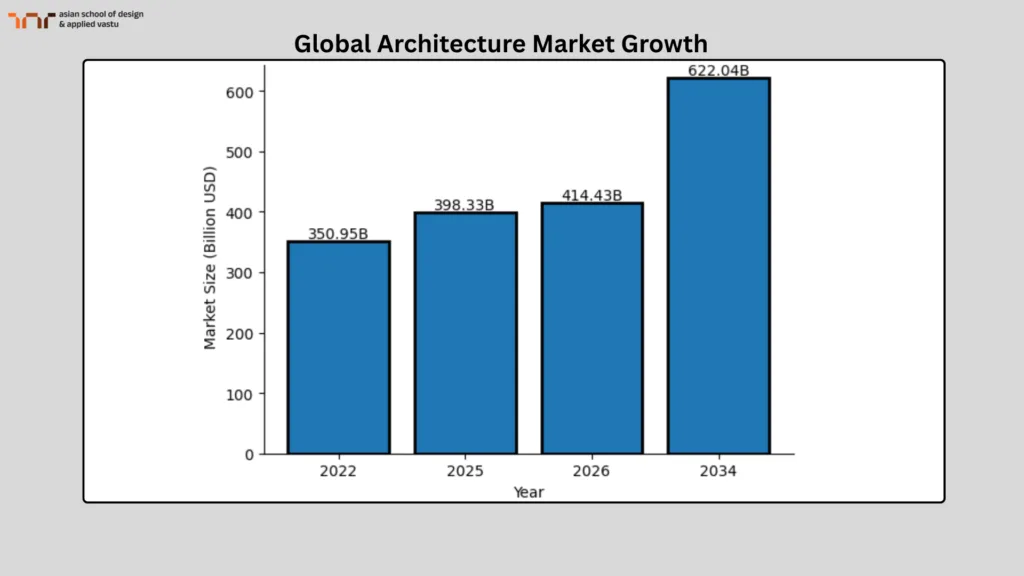
- The global architecture market reached about $350.95 billion in 2022, and it is expected to grow at a steady rate of around 4.2% each year.
- The architectural services market stood at nearly $398.33 billion in 2025, and it is projected to reach about $414.43 billion in 2026.
- Experts expect this market to grow further and reach around $622.04 billion by 2034, showing strong long-term demand.
- The Asia Pacific region holds a major share, with about 33.60% of the global market in 2025.
- In terms of value, Asia Pacific generated around $133.68 billion in 2025 and may grow to about $139.62 billion in 2026.
- The Middle East architecture market is also expanding and is expected to reach nearly $25 billion by 2027.
- The sustainable architecture segment is growing very fast and may reach around $1.2 trillion by 2030.
- The modular architecture market is also rising and is expected to hit nearly $120 billion by 2028.
Where Demand Is Growing in Architecture
Different project types drive demand in the architecture industry. Large infrastructure and industrial projects take a major share. Residential and public sector projects also add steady demand. Understanding these areas helps identify where most work and opportunities exist.
- In 2026, projects related to manufacturing and infrastructure make up about 35.05% of total demand, making it the largest segment.
- Residential projects account for nearly 26% of the market, showing strong demand for housing and living spaces.
- Government and education projects contribute 20%, which includes schools, public buildings, and institutions.
- Healthcare projects hold 12% share, driven by the need for hospitals and medical facilities.
- Construction and project management services alone contribute about 34.09% of the total market share in 2026.
- Housing plays a major role in architecture work, contributing to nearly one-third of all projects, and it forms about 80% of work for small firms.
Key Architecture Design Trends
Design trends show how buildings and spaces are changing. Architects now focus on flexible layouts, user comfort, and efficient use of materials. Modern projects also include smart planning and new construction methods. These trends shape how future buildings will look and function.
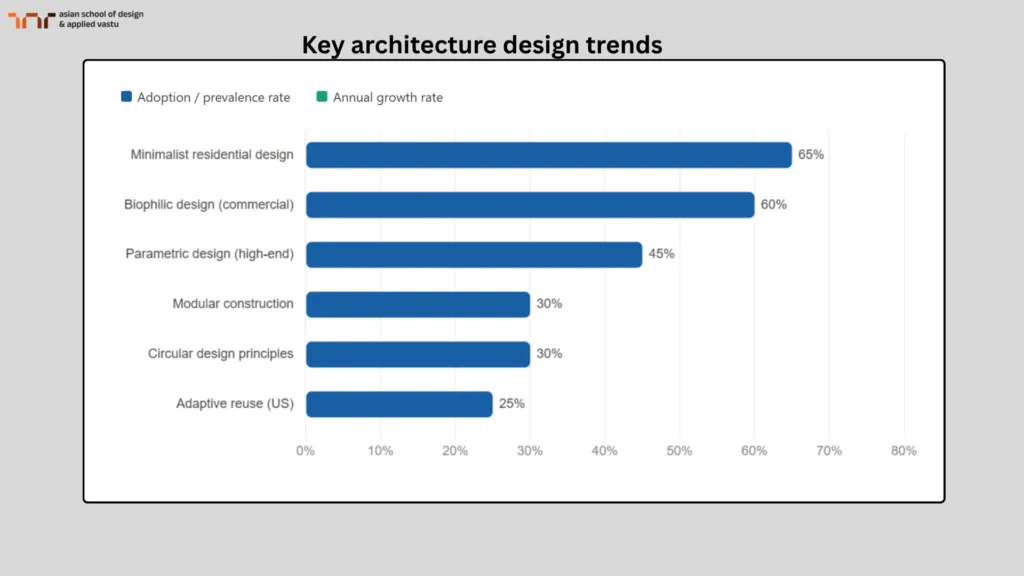
- Modular construction has increased by 30% worldwide, as firms use faster and more efficient building methods.
- Around 45% of high-end projects use parametric design, which helps create complex and optimized structures.
- 60% of new commercial buildings include biophilic design, which connects indoor spaces with nature.
- Adaptive reuse projects have grown by 25% in the United States, where old buildings get new uses.
- About 65% of residential projects follow minimalist interior design, which focuses on simple and clean layouts.
- 30% of projects now use circular design principles, which aim to reduce waste and reuse materials.
- The wellness architecture segment is growing at about 12% each year, as buildings focus more on health and comfort.
Urban Development and Large Scale Projects
Cities continue to expand with large projects and long term planning. Governments and private firms invest in tall buildings, smart cities, and mixed use spaces. These projects support population growth and better urban living. They also create strong demand for architects and planners.
- There are around 5,000 buildings taller than 200 meters worldwide, showing the rise of high rise construction.
- About 50 timber high rise buildings have been completed, which shows a shift toward sustainable materials.
- India is developing nearly 100 smart city projects, which focus on modern infrastructure and planning.
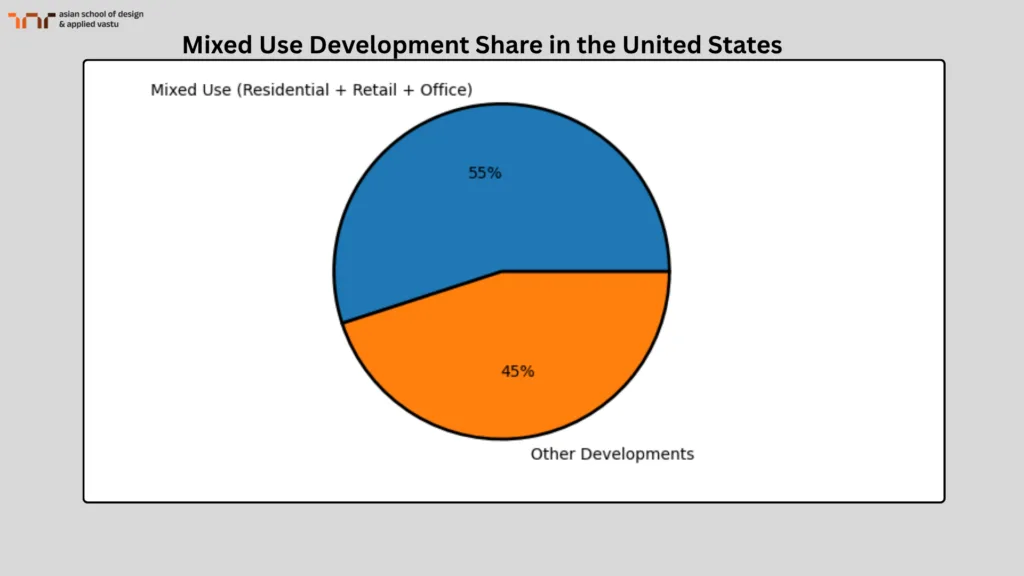
- In the United States, about 55% of new developments are mixed use, combining residential, retail, and office spaces.
- Public space redesign projects in Europe have increased by about 35%, improving urban areas.
- Turkey has planned around 50,000 housing units for post earthquake rebuilding, which shows large-scale reconstruction work.
- The United Kingdom is working on nearly 100,000 retrofit projects, where old buildings are upgraded for modern use.
Regional Design Patterns and Specialized Projects
Design choices change based on region, culture, and project needs. Many countries follow unique styles and focus areas. Some regions focus on housing layouts, while others invest in public spaces or innovation. These patterns show how architecture adapts to local demand.
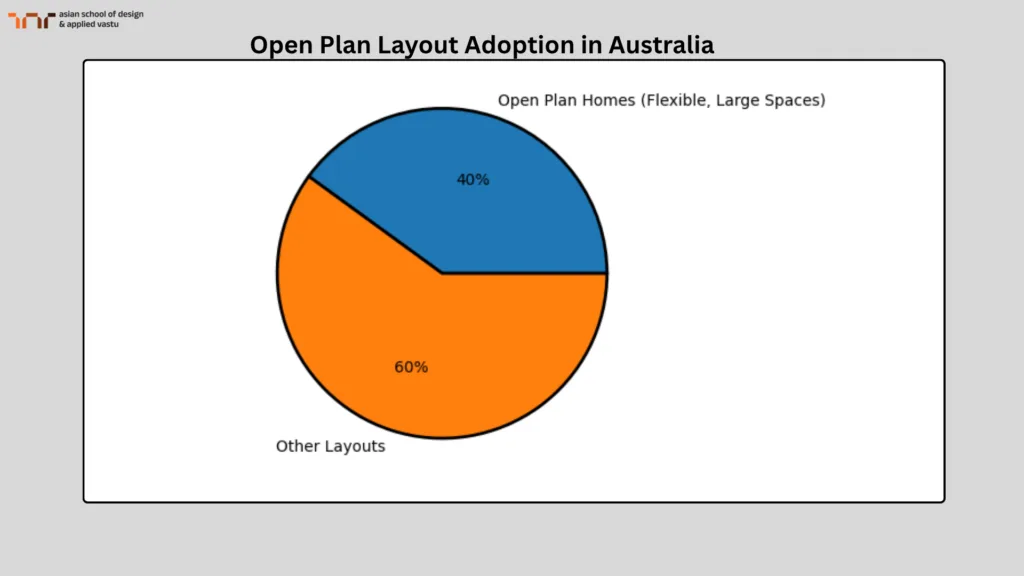
- Around 40% of residential homes in Australia follow open plan layouts, which create larger and flexible living spaces.
- France completes nearly 150 cultural architecture projects each year, including museums and public buildings.
- Brazil has carried out about 500 favela upgrade projects, which improve living conditions in urban areas.
- In Singapore, about 70% of public buildings include vertical gardens, which support green design.
- Nearly 80% of hospital designs focus on flexible layouts, so spaces can adapt to different medical needs.
- Mexico has restored around 300 heritage sites, which protects historical structures.
- Around 100 houses worldwide have been built using 3D printing technology, showing new construction methods.
- About 500 pop up architecture events take place globally, where temporary structures are used for short term needs.
Global Sustainable Architecture Trends
Sustainability now guides many design decisions in architecture. Architects focus on reducing energy use, saving natural resources, and lowering carbon impact. Many projects also use smart systems and eco-friendly materials to improve long term performance and meet global standards.
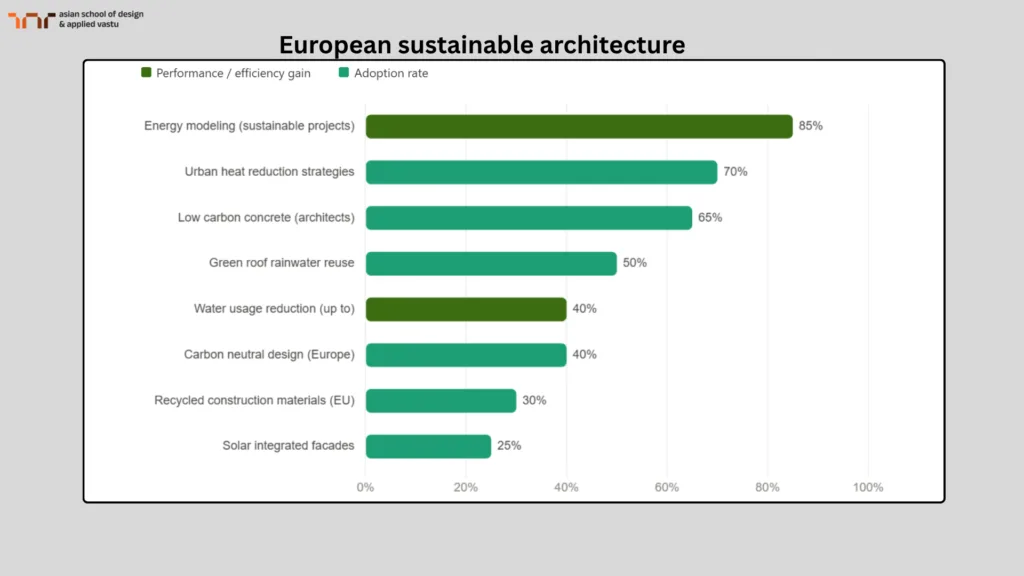
- In Europe, 40% of projects follow carbon neutral design practices, which means buildings are planned to reduce or balance their carbon emissions.
- One in four new buildings uses solar integrated facades, where building surfaces help generate clean energy instead of only consuming it.
- Buildings designed with water efficient systems can reduce water usage by up to 40%, which helps manage limited water resources.
- In the European Union, 30% of projects use recycled construction materials, which lowers waste and reduces the need for new raw materials.
- Energy modeling is used in 85% of sustainable projects, helping architects test and improve building performance before construction begins.
- 70% of urban projects include heat reduction strategies, such as green roofs and shaded areas, to control rising city temperatures.
- Half of green roof systems collect and reuse rainwater, which supports water conservation and reduces runoff.
- 65% of architects now choose low carbon concrete, which produces less pollution during manufacturing.
Green Certifications Across Countries
Many countries use rating systems to measure how eco friendly a building is. These certifications guide architects to follow better design standards. They also show how different regions focus on sustainability through rules, labels, and performance benchmarks.
- The United Kingdom has about 5,000 certified Passivhaus buildings, which follow strict energy saving standards.
- India recorded 1,200 green building certifications in 2023, showing steady growth in sustainable projects.
- In Australia, 90% of buildings meet NABERS performance ratings, which track energy and environmental impact.
- Canada added around 500 new zero carbon buildings, which operate with very low emissions.
- In China, 70% of new urban buildings follow green building standards, showing large scale adoption.
- Germany has issued 2,500 DGNB certifications, which focus on sustainability and building performance.
- France has awarded 1,000 HQE labels, which measure environmental quality in buildings.
- The UAE has developed 500 projects under the Estidama rating system, which promotes sustainable urban design.
- Singapore has certified 200 buildings under the Green Mark Platinum level, which reflects high sustainability standards.
Climate Resilient Design and Material Innovation
Architecture now focuses on handling climate risks and improving building durability. Designers use better materials and planning methods to reduce damage from heat, floods, and disasters. Many projects also focus on lowering carbon impact through smarter material choices.
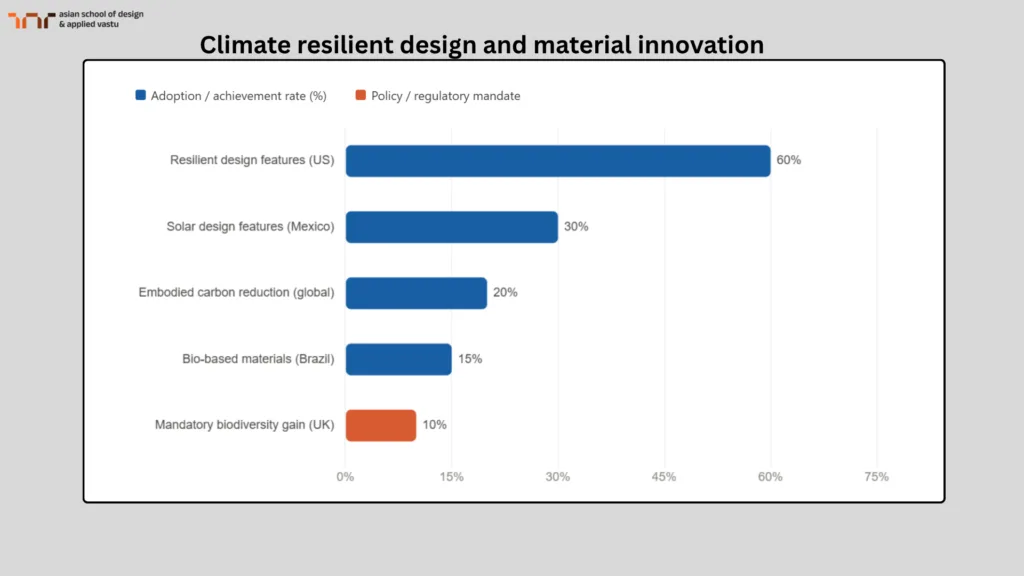
- Buildings today achieve about 20% reduction in embodied carbon, which lowers emissions from materials and construction processes.
- In the United States, 60% of projects include resilient design features, which help buildings withstand extreme weather like hurricanes.
- Japan supports 300 zero energy building projects through ZEB programs, which aim to reduce total energy use.
- In Brazil, 15% of projects use bio based construction materials, which come from natural and renewable sources.
- South Africa has certified 800 projects under the EDGE green building system, which focuses on resource efficiency.
- The United Kingdom has made 10% biodiversity gain mandatory in new developments, which helps protect natural ecosystems.
- In Mexico, 30% of projects include solar design features, which support renewable energy use.
Technology Trends in Architecture
Technology now plays a key role in how architects design and deliver projects. Digital tools help improve accuracy, speed, and collaboration. Many firms use advanced software, automation, and visual tools to plan better buildings and reduce errors.
- Large firms use BIM for sustainability in 75% of projects, which helps track energy use and improve design decisions.
- Half of client presentations now include virtual reality walkthroughs, which allow clients to explore designs before construction starts.
- 80% of architecture firms use cloud based collaboration tools, which help teams work together from different locations.
- Digital twins are used in 20% of large projects, where a virtual model tracks real time building performance.
- Drone technology supports 60% of site analysis work, which improves accuracy in surveys and inspections.
- Augmented reality is used on site in 45% of projects, helping teams visualize designs during construction.
- The global BIM market is expected to reach $15 billion by 2028, showing strong demand for digital tools.
- Revit is used by 70% of architecture professionals, making it one of the most common design tools.
- Automation tools help reduce design time by up to 40%, which improves project efficiency.
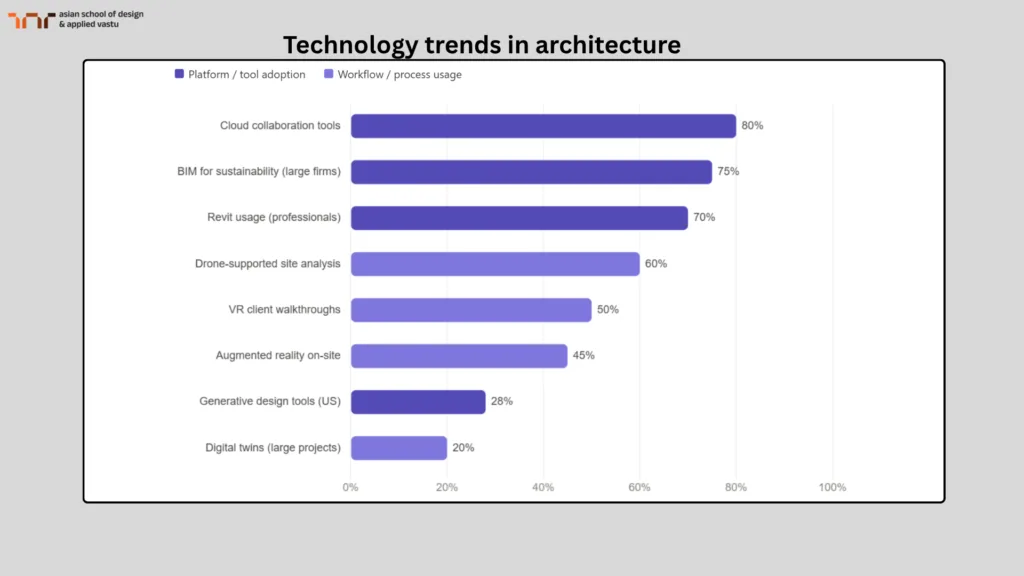
- In the United States, 28% of firms use generative design tools, which create multiple design options using algorithms.
- In India, 25% of large firms have adopted BIM, showing growing use of digital systems.
Architecture Career and Skill Trends
The architecture field offers many career paths across design, planning, and technology. Firms now look for professionals who can handle both creative and technical work. Demand for skilled architects continues to grow as projects become more complex and technology driven.
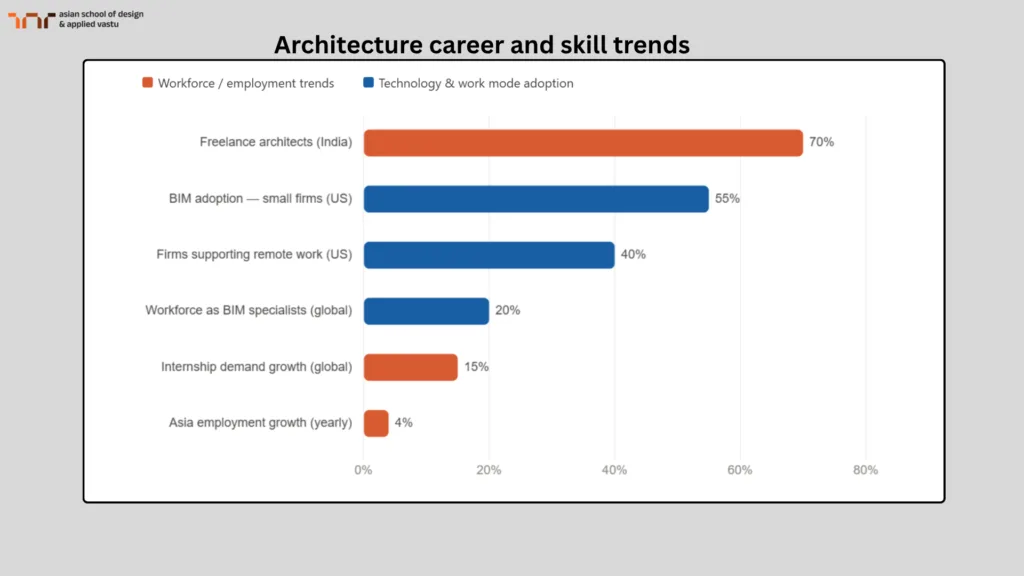
- Demand for architecture internships has increased by 15%, which shows rising interest among students.
- 20% of the architecture workforce now works as BIM specialists, which highlights the need for digital skills.
- In the United States, firms face a 15% yearly employee turnover rate, which creates regular job openings.
- Smaller firms in the US have reached 55% BIM adoption, showing that even small teams use advanced tools.
- About 40% of architecture firms in the US support remote work, which allows flexible job options.
- In India, 70% of architects work as freelancers, which shows a strong shift toward independent work.
- Across Asia, architecture employment grows at 4% each year, which reflects steady job demand.
- Singapore has around 4,000 registered architects, which shows the size of its professional workforce.
👉 Read our recent statistical article:
Build Practical Architecture Skills with ASDAV
The architecture industry now needs professionals who can handle real projects, use modern tools, and make clear design decisions. Basic theory alone does not prepare you for this level of work. You need practical training that matches real industry workflows.
ASDAV offers online architecture and design courses that focus on hands-on learning and real use cases. You learn core architecture skills with real world application, along with training in tools like AutoCAD and Revit.
The course also includes assignments, case studies, and portfolio projects that prepare you for real client work and BIM based workflows.
Classes are live and instructor-led, which allows step by step learning with real time doubt solving. The training also covers BIM workflows and digital design, which are now important skills in modern architecture. After completing the course, learners receive a certificate that confirms their practical training.
See what students have said about us:

ASDAV works as a skill focused design school, not a traditional college. The goal is to help learners become confident and ready for real projects. If you want to build strong architecture skills and match current industry demand, you can explore their courses and start learning today.
Data Sources
- https://www.researchandmarkets.com/reports/6035350/architecture-design-software-market-report
- https://www.riba.org/work/insights-and-resources/riba-future-trends/
- https://www.fortunebusinessinsights.com/architectural-services-market-113729
- https://www.grandviewresearch.com/industry-analysis/architectural-services-market
- https://www.ribaj.com/intelligence/economic-indicators-for-2026-architecture-market/
- https://gitnux.org/architecture-industry-statistics/
- https://statista.com/
- https://mordorintelligence.com/
- https://ibisworld.com/
- https://pwc.co.za/
- https://singstat.gov.sg/
- https://www.bls.gov/
- https://ncarb.org/

Jasmine Ahluwalia is a Licensed Architect, Interior designer, Global Vastu consultant and the founder of ASDAV.
She is a graduate of Scuola Master F.lli Pesenti, Politecnico di Milano, and brings strong global exposure through academic learning and professional design projects. Her background combines architecture, interior design, and applied design education.
Before founding ASDAV, Jasmine worked as an assistant professor at Amity School of Architecture and Planning, Amity University Noida. Her research covers sustainable architecture, urban heat island reduction, and circular economy practices in construction. Her work has been published in Scopus indexed and peer reviewed journals as well. She also has strong international on-site experience from countries like Canada, Mauritius, UK, and many more.
Through ASDAV, she has trained more than 500 students across 25 cities. The ASDAV platform has 12+ instructors from IIT, SPA, CEPT and NID , and has delivered over 200 live learning sessions. Her mission is to bridge the gap between design education and real industry expectations, to deliver real growth for her students.
She designs spaces for a living, but her favourite project is designing careers.