
Online learning has become a major part of education and professional training. Universities, companies, and learning platforms now use digital courses to help people build new skills and access flexible education from anywhere. The growth of internet access, mobile devices, and education technology has accelerated the adoption of eLearning worldwide.
In this article, we present key eLearning statistics covering market size, platform usage, learner behavior, and corporate training trends. All statistics in this report are curated from trusted industry studies, research reports, and leading online learning platforms.
Key eLearning Statistics at a Glance
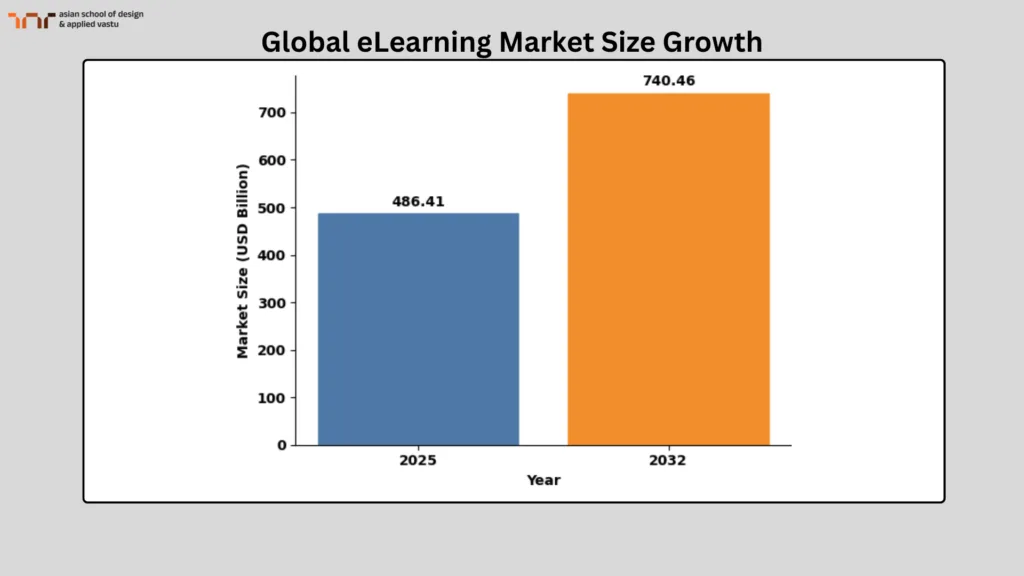
- The global eLearning market reached $486.41 billion in 2025 and may grow to $740.46 billion by 2032.
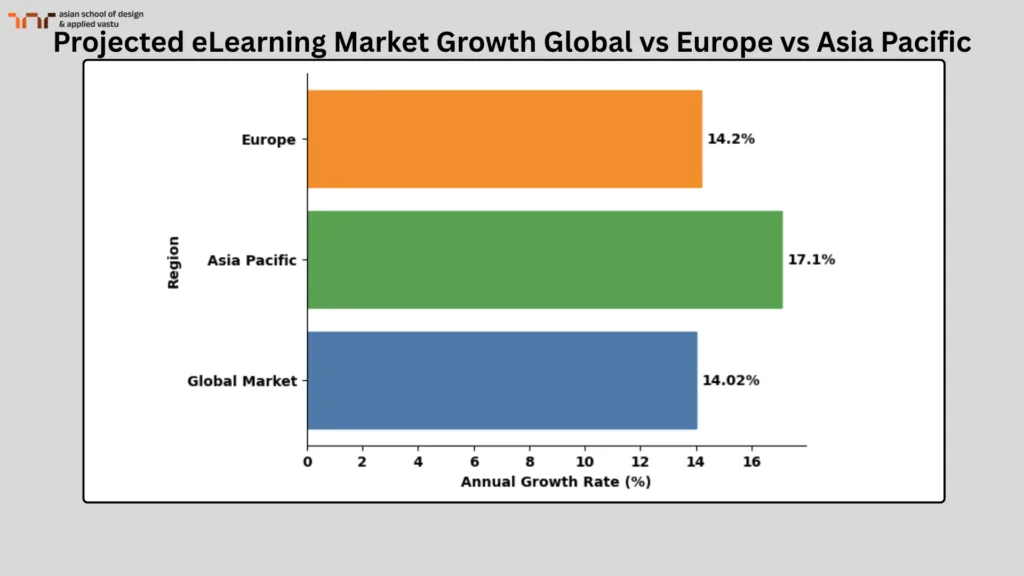
- The industry is expected to grow at a 14.02% annual rate, showing strong long term expansion.
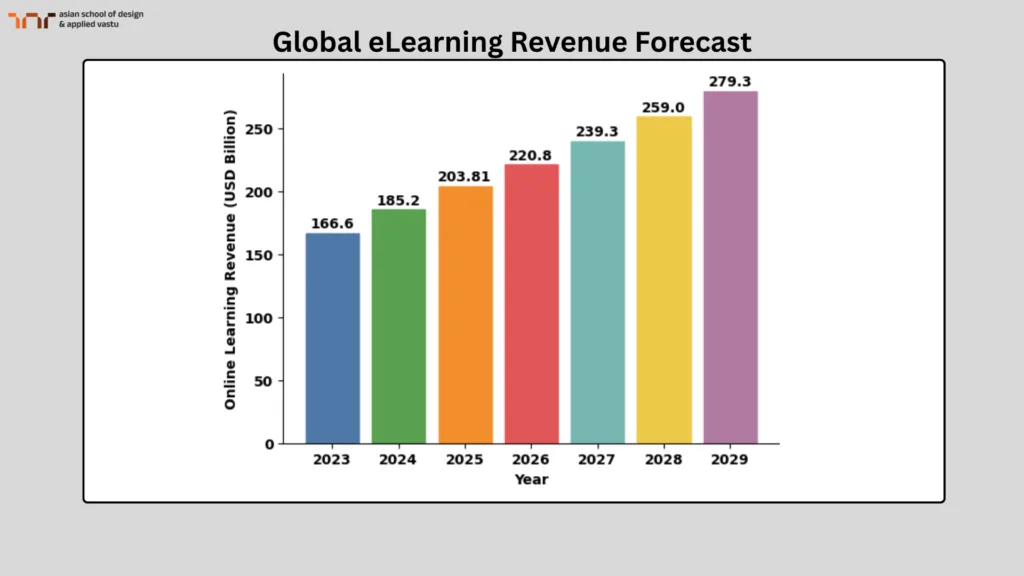
- Online learning revenue is projected to reach $203.81 billion in 2025 and $279.30 billion by 2029.
- The United States eLearning market may generate $112.68 billion in 2025.
- Online learning platforms could reach 1.2 billion users by 2030.
- Around 69% of students prefer online or hybrid learning over traditional classroom formats.
- About 98% of universities offer online courses, showing widespread adoption.
- 90% of companies use online learning for employee training and skill development.
- eLearning helps employees retain 25% to 60% more knowledge compared to traditional training.
- Online training can reduce learning time by 40% to 60%.
- Around 78% of learners prefer self paced learning, showing demand for flexibility.
- Mobile and device usage is high, with 91% of students using laptops and 88% using smartphones for learning.
Global eLearning Market Size and Growth Statistics
The online learning industry has grown quickly as digital education becomes common in schools, universities, and workplaces. Improvements in internet access, cloud platforms, and learning technologies have expanded the reach of eLearning across the world. The statistics below highlight the current size of the market and its projected growth in the coming years.
- In 2025, the global eLearning industry reached an estimated market value of $486.41 billion.
- Market forecasts indicate that the industry could grow to around $740.46 billion by 2032.
- In the United States alone, the eLearning market is projected to generate approximately $112.68 billion in revenue by 2025.
- North America currently represents the largest regional share of the global eLearning market, with expected growth of around 10.3% per year through 2030.
- Analysts expect the global eLearning sector to expand at an average annual growth rate of about 14.02% during the forecast period.
- The Asia Pacific region is expected to record the fastest expansion, with a projected 17.1% annual growth rate.
- European markets are also experiencing steady growth, with an estimated 14.2% expansion rate in the eLearning sector.
Global eLearning Revenue Forecast
The online education industry continues to expand as more learners enroll in digital courses and training programs. Increasing adoption of remote education and professional certification programs has contributed to steady market growth.
| Year | Online Learning Revenue |
| 2023 | $166.60 billion |
| 2024 | $185.20 billion |
| 2025 | $203.81 billion |
| 2026 | $220.80 billion |
| 2027 | $239.30 billion |
| 2028 | $259.00 billion |
| 2029 | $279.30 billion |
Online Learning Revenue by Segment
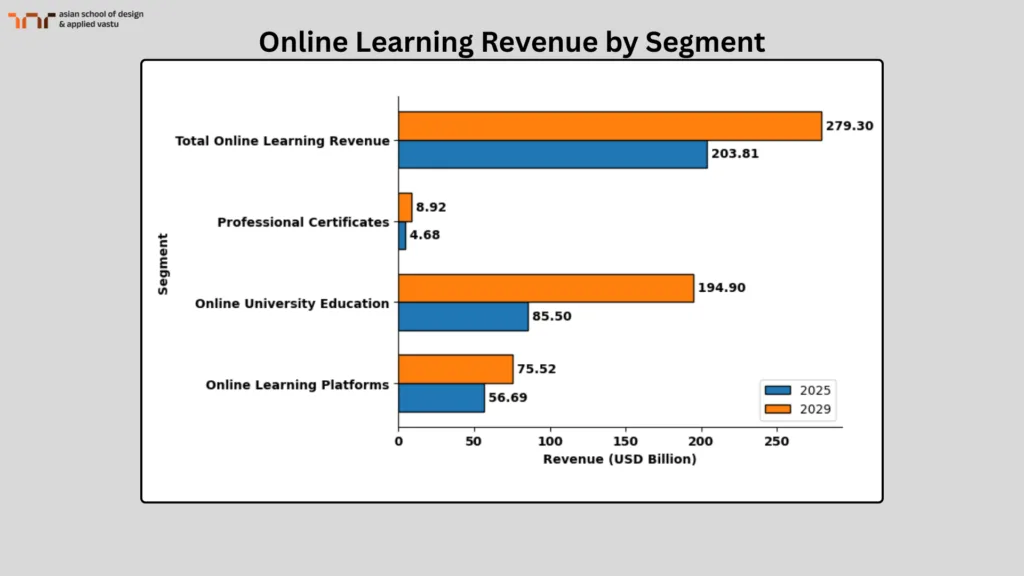
Different segments contribute to the overall growth of the online education industry. Revenue comes from learning platforms, university degree programs delivered online, and professional certification programs. The table below shows how revenue from these segments is expected to change between 2025 and 2029.
- Among these segments, online university education is expected to experience the largest revenue growth during this period.
| Segment | 2025 Revenue | 2029 Revenue |
| Online Learning Platforms | $56.69 billion | $75.52 billion |
| Online University Education | $85.50 billion | $194.90 billion |
| Professional Certificates | $4.68 billion | $8.92 billion |
| Total Online Learning Revenue | $203.81 billion | $279.30 billion |
Online Learning User Statistics
The number of people using online education platforms continues to increase as digital learning becomes more accessible worldwide. Growth in internet connectivity, mobile devices, and remote learning opportunities has expanded the reach of online education across many regions. The Asia Pacific region currently accounts for the largest share of learners on many eLearning platforms worldwide.
- Industry projections suggest that online education platforms could reach about 1.2 billion users globally by 2030.
- The online education market is expected to achieve user penetration of roughly 16.8% by 2026.
- The average revenue generated per user in the online education market is projected to reach about $223.94.
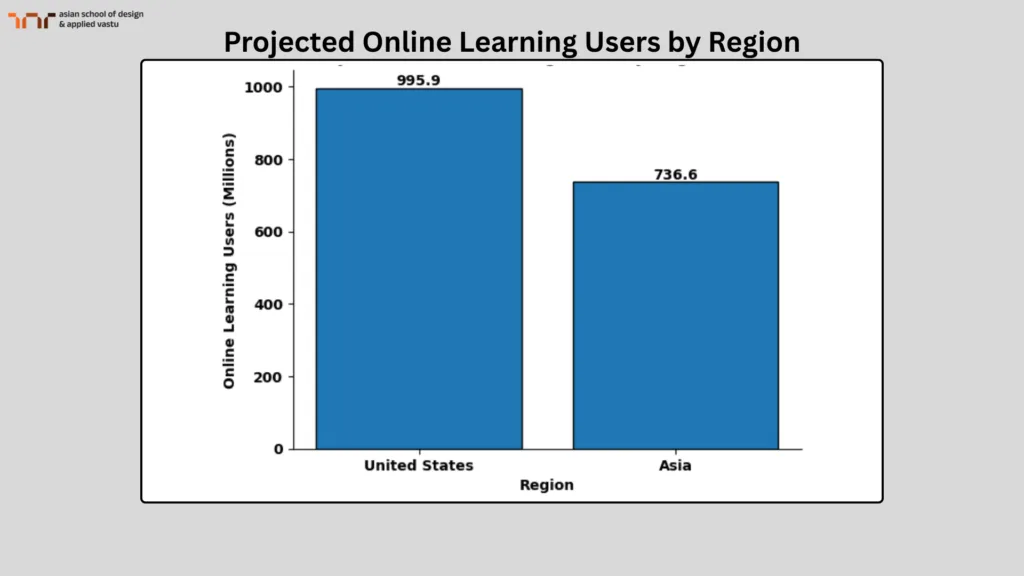
- In the United States, forecasts indicate that around 995.9 million people may use online learning platforms by 2029.
- Across Asia, the number of digital learners is expected to reach about 736.6 million users by 2029.
- In China alone, the online learning industry is projected to generate around $40.43 billion in revenue in 2025.
MOOC Platform Statistics
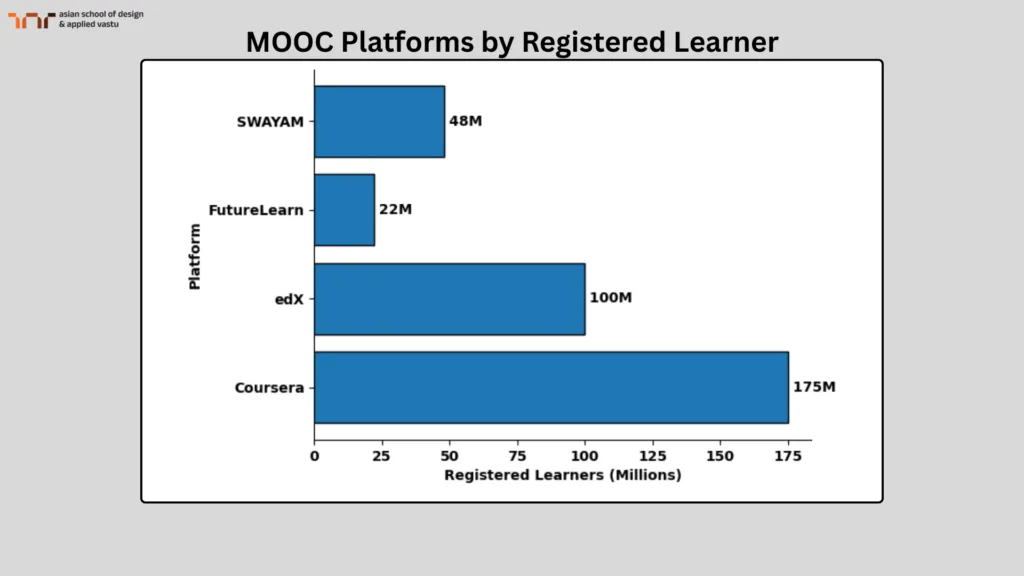
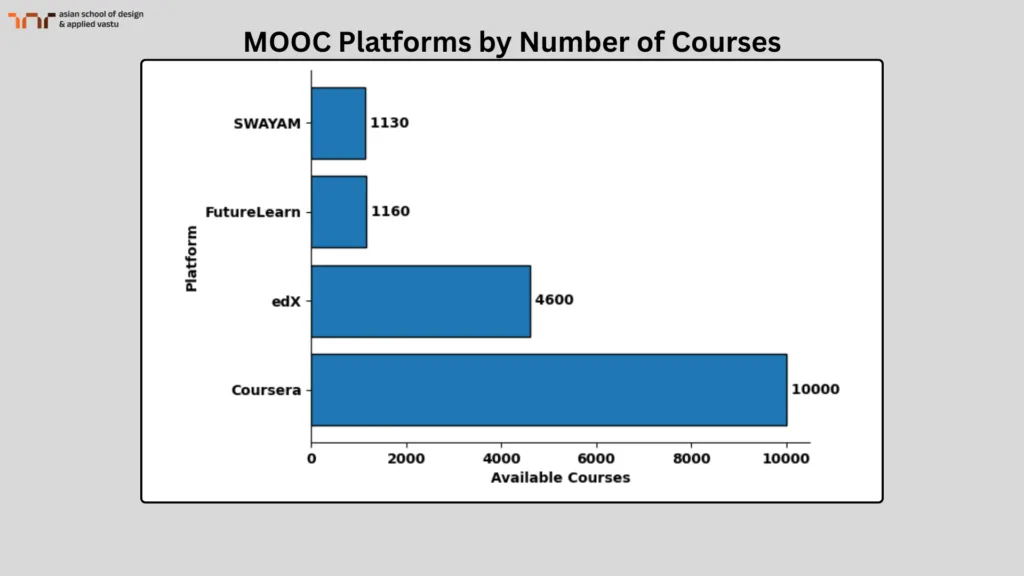
Massive Open Online Course platforms help millions of learners access education from universities and industry experts. These platforms host thousands of courses across many subjects, including technology, business, and science.
| Platform | Registered Learners | Available Courses |
| Coursera | 175 million | 10,000+ |
| edX | 100 million | 4,600+ |
| FutureLearn | 22 million | 1,160+ |
| SWAYAM | 48 million | 1,130+ |
MOOC Platforms by Registered Learner:
MOOC Platforms by Number of courses:
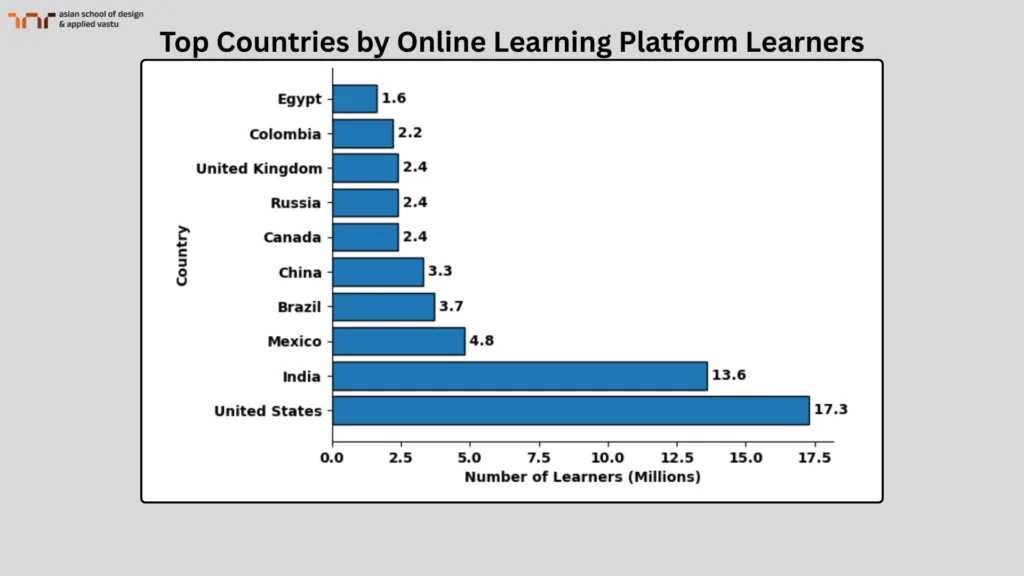
Countries With the Highest Number of Online Learners
Online learning platforms attract students from many parts of the world. Countries with large populations, strong internet access, and growing demand for digital skills often have higher numbers of online learners. The table below shows the countries with the largest number of learners on a major online learning platform.
| Country | Number of Learners |
| United States | 17.3 million |
| India | 13.6 million |
| Mexico | 4.8 million |
| Brazil | 3.7 million |
| China | 3.3 million |
| Canada | 2.4 million |
| Russia | 2.4 million |
| United Kingdom | 2.4 million |
| Colombia | 2.2 million |
| Egypt | 1.6 million |
Online Education Platform Traffic Statistics
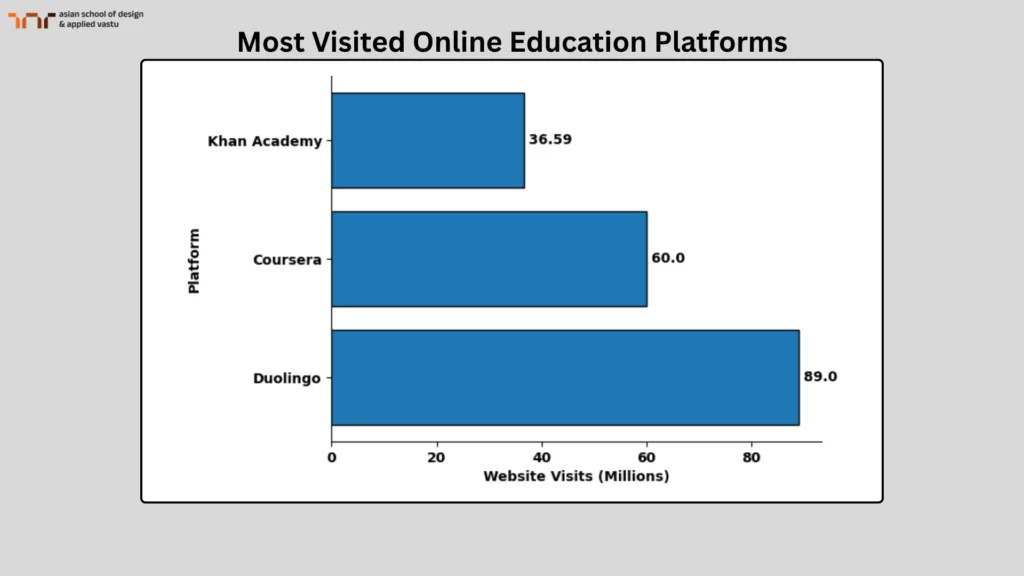
Several education platforms attract millions of visitors each month as learners search for courses, language training, and academic resources. Website traffic gives a clear view of which platforms receive the most attention from online learners.
- Duolingo recorded about 89 million website visits between April 2022 and January 2024, making it one of the most visited online education platforms.
- Coursera received around 60 million visits during the same period, reflecting strong demand for professional and university-level online courses.
- Khan Academy generated approximately 36.59 million visits, showing continued interest in free educational resources and learning tools.
Learner Demographics and Preferences
Online learning attracts students from different age groups and educational backgrounds. Many learners choose digital education because it offers flexible study options and allows them to balance learning with work or personal commitments. The statistics below highlight learner demographics and general preferences toward online education.
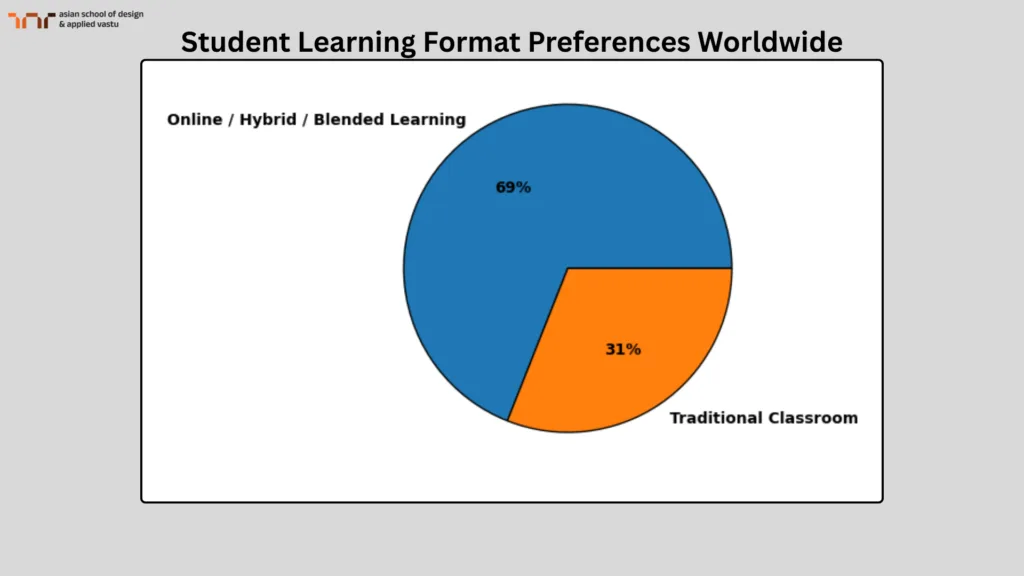
- Around 69% of students worldwide prefer fully online, hybrid, or blended learning formats, with 31% of students still prefer traditional face to face classroom learning.
- Approximately 41% of graduates in the United States say they favor online education over traditional in person programs.
- The typical age of an online learner worldwide is around 32 years, showing that many working professionals use digital platforms to build new skills.
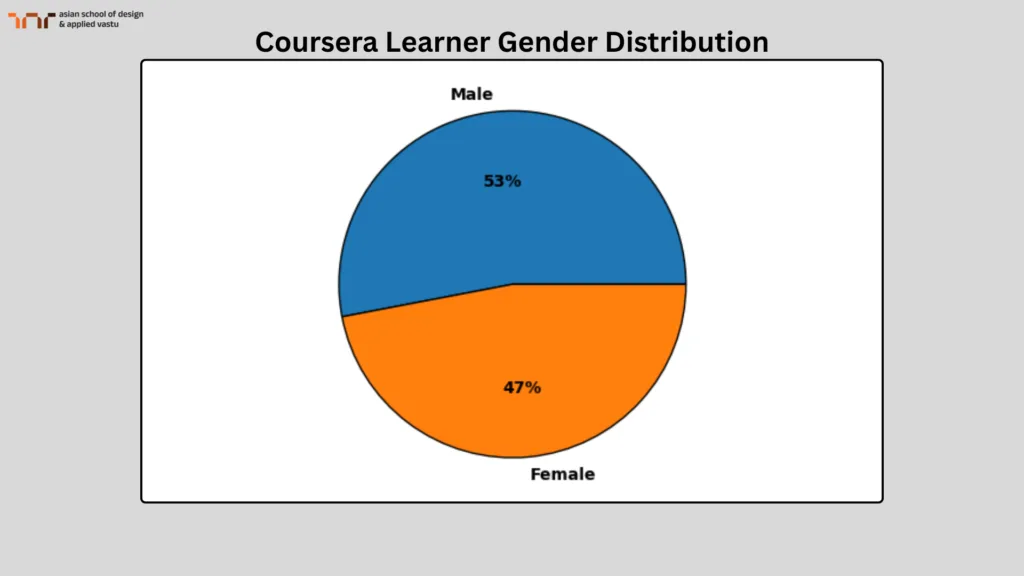
- On the Coursera platform, about 53% of learners are male and 47% are female, showing a relatively balanced gender distribution among users.
Online Learning Adoption and Enrollment Statistics
Educational institutions increasingly use online learning to support flexible study options. Universities now offer digital courses, hybrid programs, and fully online degrees to meet changing student preferences. The statistics below show how students participate in online learning across higher education.
- About 98% of universities now offer online courses, showing how widely digital learning has been adopted in higher education.
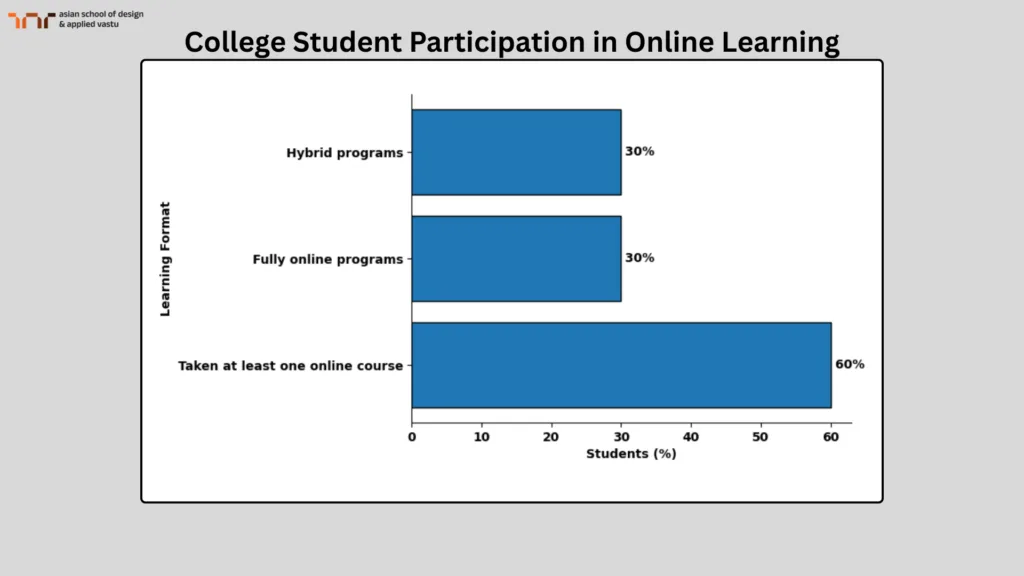
- Roughly 60% of college students have taken at least one online course, while around 30% complete their studies fully online and another 30% follow hybrid programs that combine online and classroom learning.
- Approximately 61% of undergraduate students enroll in at least one online course, while about 56% of graduate students participate in online learning programs.
- Traditional university enrollment has declined by about 3%, while enrollment at large online universities has grown by around 11%.
Learner Experience and Satisfaction Statistics
Learner satisfaction plays an important role in the success of online education platforms. Course design, instructor support, and platform usability influence how students evaluate their learning experience. The statistics below highlight how learners interact with digital courses and which features improve engagement and satisfaction.
- Flexible learning schedules are a major reason for adoption, with 90% of learners choosing online education because it offers greater convenience.
- 70% to 92% of learners prefer courses that include video lessons, as visual explanations help simplify complex topics.
- Navigation issues still affect some platforms, and 55% of learners report difficulty navigating certain online learning systems.
- 73% of learners say they are more likely to recommend platforms that provide strong learning support.
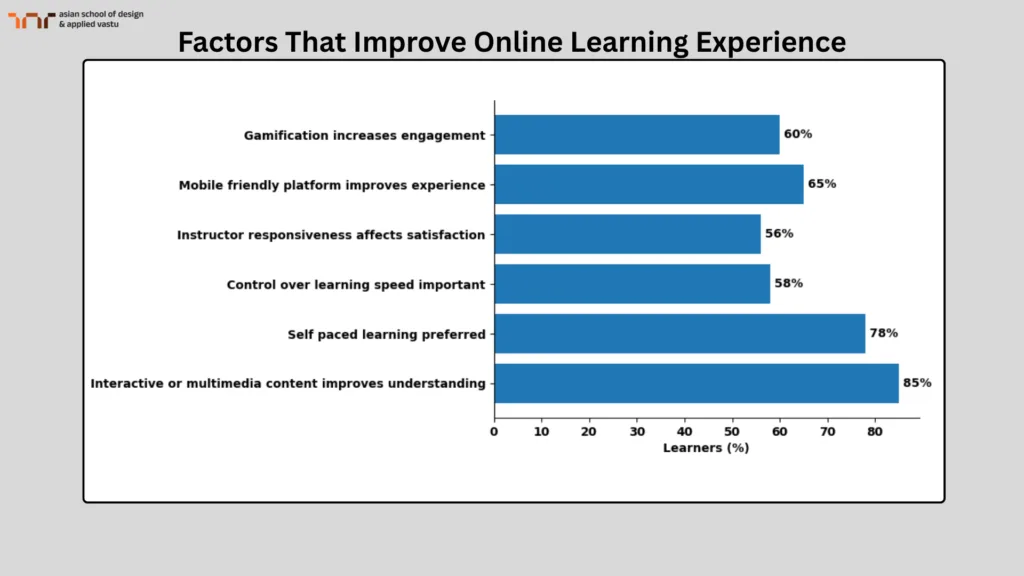
- 85% of learners report stronger understanding and knowledge retention when courses include interactive or multimedia elements.
- About 78% of learners prefer courses that allow them to study at their own pace, while 58% say controlling their learning speed is an important feature of online learning.
- Instructor support also affects the overall learning experience, as 56% of learners say instructor responsiveness influences their satisfaction with a course.
- 65% of learners say mobile friendly platform design improves their learning experience.
- Gamified learning tools such as quizzes and rewards can improve participation, increasing engagement by up to 60%.
Education Technology and Learning Devices Statistics
Technology plays a major role in how students access and interact with online learning platforms. Devices such as smartphones and laptops allow learners to attend classes, watch lessons, and complete assignments from anywhere. The statistics below highlight how students use technology and how digital tools influence the learning experience.
- 88% of students consider their smartphones important for academic work, while 91% rely on laptops to complete coursework and assignments.
- A study shows that 45% of teenagers believe smartphones make it easier for them to succeed in school, while 23% say mobile devices make learning more difficult.
- Short video content has become a useful learning tool, and 88% of medical students say short instructional videos under 10 minutes help them prepare better for classes.
- Concerns about technology are also rising, as 70% of students report feeling anxious about the impact of artificial intelligence on future job opportunities.
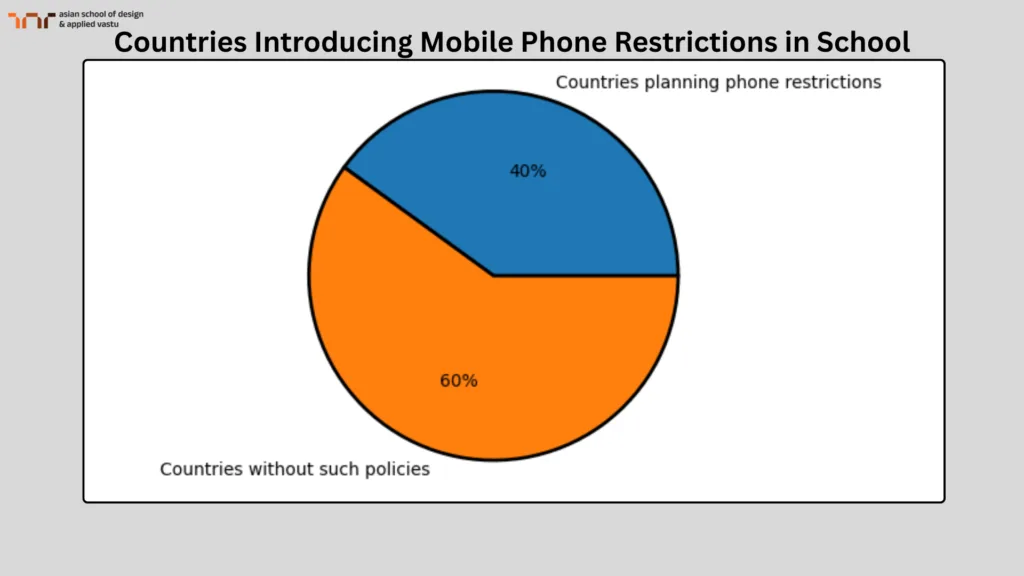
- Many education systems are responding to device concerns, with nearly 40% of countries expected to introduce policies that restrict mobile phone use in schools.
Corporate eLearning and Workplace Training Statistics
Many organizations now use digital learning platforms to train employees and build workforce skills. Online training allows companies to deliver courses quickly, reduce training costs, and help employees learn new skills without leaving the workplace.
- 89% to 93% of companies worldwide use a learning management system to deliver online training programs.
- Among these systems, 55% operate on cloud infrastructure, allowing companies to manage training remotely.
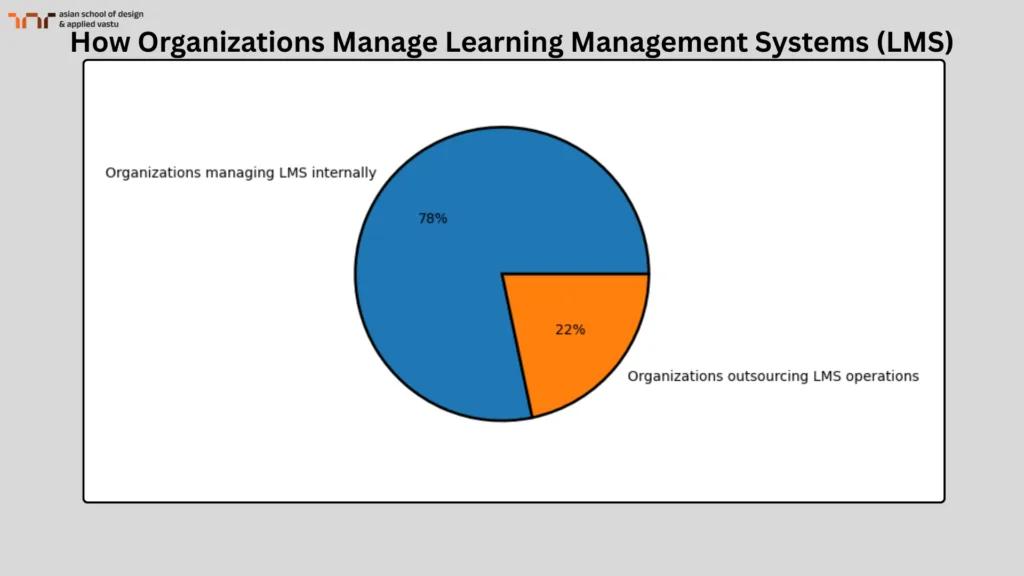
- 83% of organizations manage their learning platforms internally, while 23% outsource LMS operations to external providers.
- Online training improves learning outcomes, as employees can retain 25% to 60% more knowledge through eLearning programs.
- Digital training also improves efficiency, with training time reduced by 40% to 60% compared with traditional classroom training.
- Companies that adopt eLearning programs can see employee performance improve by 15% to 25%.
- Research shows that employees learn up to five times more content through eLearning compared with in person training.
- Organizations that provide online training opportunities experience stronger retention, as employees are 36% more likely to remain with companies that invest in learning programs.
- Businesses can also lower training expenses, since online learning programs can reduce training costs by up to 60%.
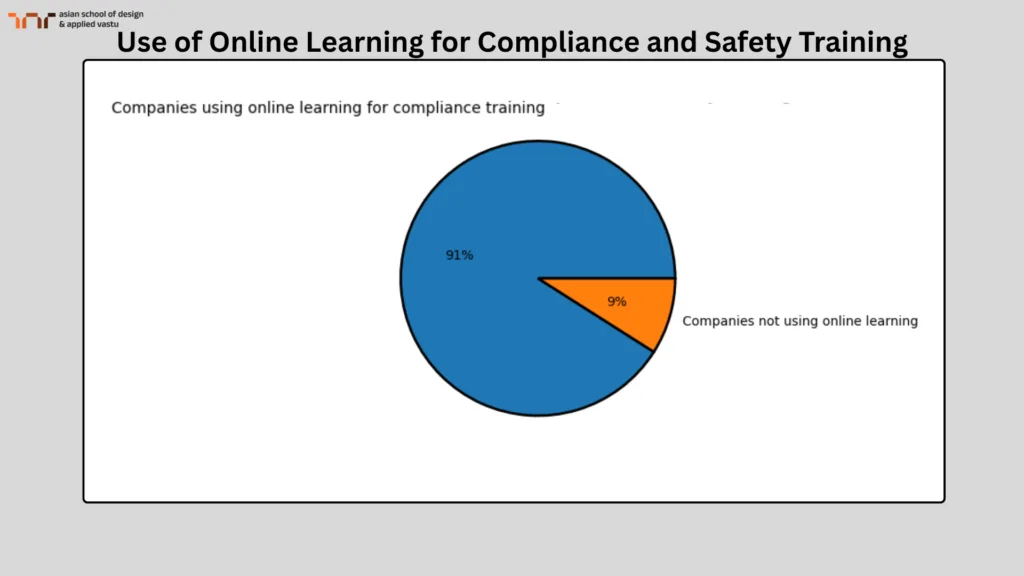
- 91% of companies use online learning platforms at least partially to deliver compliance and safety training programs.
Corporate Training Trends and Learning Priorities
Organizations continue to expand digital learning programs as they invest in employee development and skill building. Companies are increasing training budgets, adopting new learning technologies, and focusing on programs that improve workforce performance. The statistics below highlight key trends shaping corporate learning strategies.
- 36% of large companies conduct training programs online without instructors, while 34% of small companies and 33% of midsize companies use similar instructor free training models.
- Training budgets are increasing in many organizations, with 38% of companies reporting higher training spending due to investments in new technology and equipment.
- 17% of companies plan to increase remote meetings for desktop based compliance and application training.
- Companies also plan to expand remote learning for employee onboarding 16%, IT and systems training 15%, and industry specific training 14%.
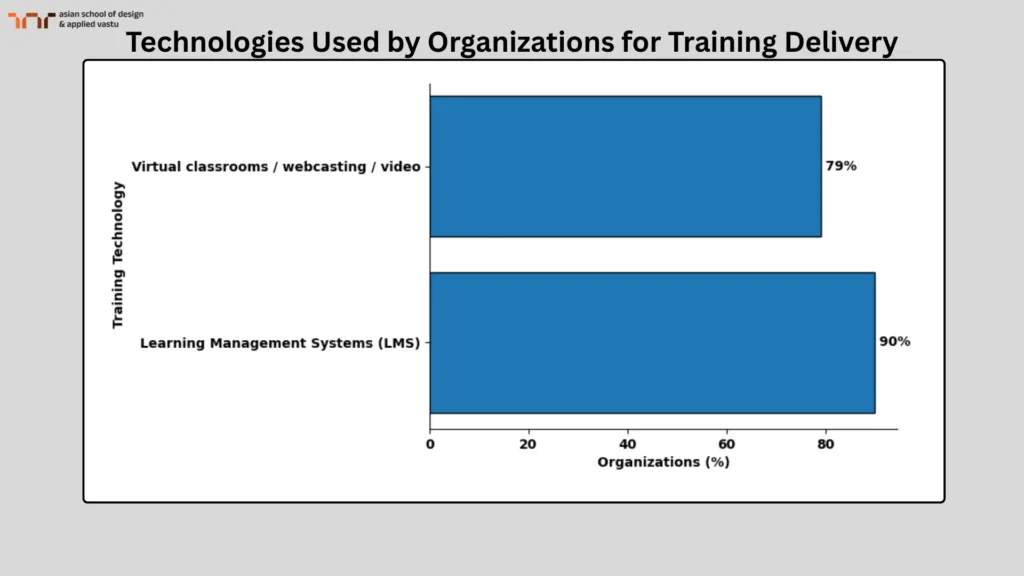
- Across organizations, 90% use learning management systems, while 79% rely on virtual classrooms, webcasting, or video broadcasting to deliver training programs.
- Corporate training also supports broader business goals, with 61% of experts say closing skill gaps is the top priority when introducing eLearning programs.
- The corporate eLearning sector continues to expand and is projected to reach a market value of $44.6 billion by 2028.
Micro Credentials and Career Impact Statistics
Micro credentials and short professional certifications are becoming an important part of modern education. Many universities and online learning platforms now offer these programs to help learners gain specialized skills and improve career opportunities.
- 1% of global education leaders report that their institutions already include micro credentials within academic programs.
- Student demand for flexible credentials is rising, with 75% of learners preferring degree programs that recognize or accept micro credential credits.
- Among institutions that do not yet offer micro credentials, 68% plan to introduce them within the next five years.
- Career focused certificates are also producing strong outcomes with 25% of entry level professional certificate completers secured new jobs in 2023.
- By the ned of 2025, 87% of certificate learners reported some form of career benefit after completing their programs.
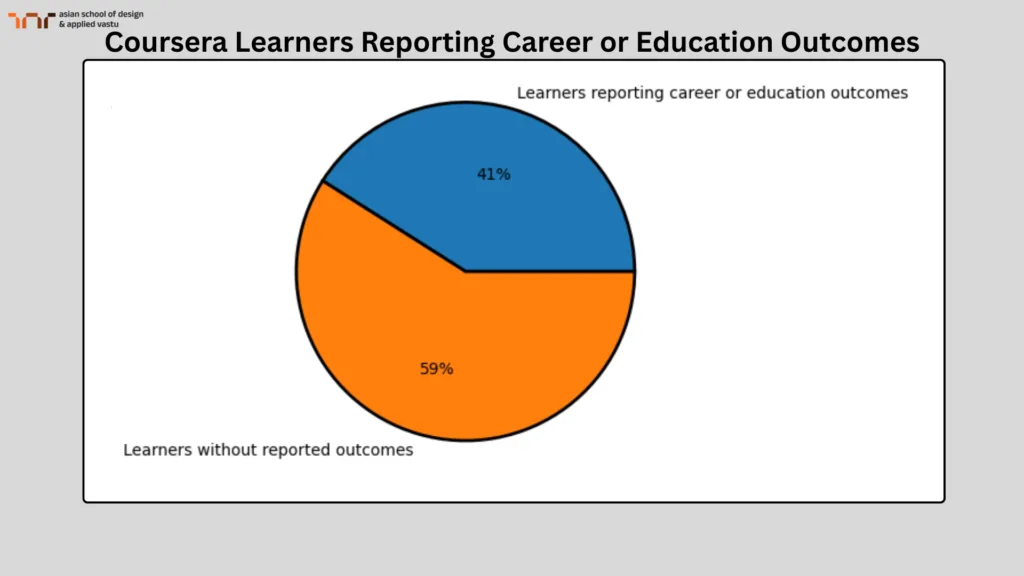
- 41% of online learners from Coursera reported results such as earning a degree, receiving job interviews, or gaining salary increases.
- In addition to career results, 82% of learners reported personal benefits such as improved work performance, higher confidence, or stronger knowledge in their field.
Online Learning Outcomes and Student Perceptions
Student perception of online education has improved as digital learning platforms become more advanced. Many learners now see online programs as comparable to traditional classroom education. The statistics below highlight how students evaluate the value, effectiveness, and outcomes of online learning.
- 88% of students believe employers view an accredited online degree as equally valuable or more valuable than a traditional campus degree.
- 90% of online learners say digital education is comparable to or better than traditional classroom learning.
- Student perception of value is also strong, with 93% of graduates reporting that their online education provides a positive return on investment.
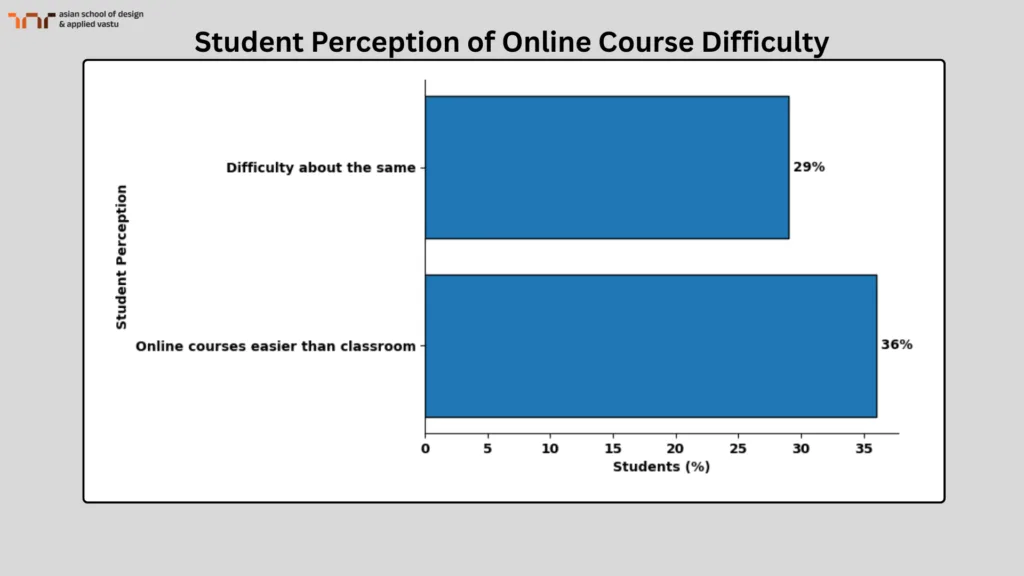
- Course difficulty perceptions vary. 36% of students say completing an online course is easier than studying in a classroom, while 29% believe the level of difficulty is about the same.
- Online learning also supports stronger engagement in many programs, and companies report more than 18% improvement in employee engagement after adopting eLearning technologies.
Emerging eLearning Technology and Future Trends
The eLearning industry continues to evolve as new technologies and learning models reshape digital education. Companies and universities are investing in immersive tools, flexible learning formats, and career focused credentials to improve outcomes. The statistics below highlight key trends that may influence the future of online learning.
- 51% of companies already use or plan to integrate virtual reality into their learning strategies.
- Workplace learning preferences show strong demand for flexible formats. 68% of employees prefer learning at work, 58% prefer self paced learning, and 49% want to learn when they need specific skills.
- Online learning programs can generate measurable productivity gains. Research shows that every $1 invested in digital training produced about $30 in productivity improvements for IBM.
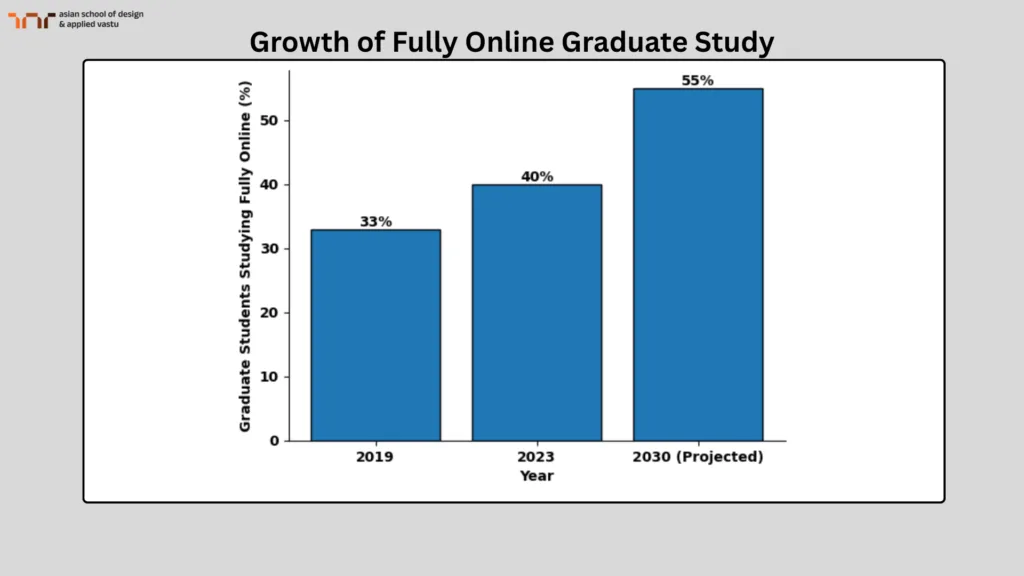
- Graduate level online learning continues to expand. The share of graduate students studying fully online increased from 33% in 2019 to 40% in 2023 and may reach 55% by 2030.
- Course completion incentives can significantly improve results, as completion rates can increase from 35% to 85% when incentives are offered.
👉 Read our recent statistical article: 30+ Interior Design Statistics That Matter
Final thoughts
The statistics in this report show how rapidly online learning has expanded across education and professional training. Universities, businesses, and digital platforms continue to invest in eLearning to make education more accessible, flexible, and skill focused. Market growth, rising user numbers, and increasing adoption of learning technologies all highlight the growing importance of digital education.
As internet access, mobile devices, and immersive technologies improve, eLearning is likely to play an even larger role in global education systems and workforce development. From university degrees to corporate training and professional certifications, online learning will continue to shape how people gain knowledge and build new skills in the coming years.
Data Sources
- https://www.mordorintelligence.com/industry-reports/e-learning-market
- https://www.unesco.org/en/covid-19/education-response
- https://www.unesco.org/en/articles/smartphones-school-only-when-they-clearly-support-learning
- https://en.unesco.org/covid19/educationresponse
- https://www.statista.com/outlook/emo/online-education/asia
- https://www.statista.com/outlook/emo/online-education/australia
- https://www.statista.com/outlook/emo/online-education/northern-africa
- https://www.statista.com/statistics/944409/concerns-about-choosing-online-education-usa
- https://www.statista.com/statistics/944274/us-distance-learning-institutions-by-enrollment-students
- https://www.pwc.com/us/en/tech-effect/emerging-tech/virtual-reality-study.html
- https://www.gallup.com/workplace/653402/employee-upskilling-vital-rapidly-evolving-job-market.aspx
- https://www.grandviewresearch.com/industry-analysis/us-e-learning-market
- https://assets.ctfassets.net/00atxywtfxvd/2eocGVEBKQlIHuLNaSuK1l/18f31949bff069d78a22daf8869566b7/2025-coursera-learner-outcomes-report.pdf
- https://www.coursera.org/enterprise/resources/ebooks/micro-credentials-report-2024/get-report
- https://www.pewresearch.org/internet/2024/03/11/how-teens-and-parents-approach-screen-time
- https://www.statista.com/outlook/emo/online-education/worldwide
- https://www.statista.com/outlook/emo/online-education/worldwide#revenue
- https://edscoop.com/students-prefer-online-learning-survey-finds/
- https://elearningstats.education/
- https://www.demandsage.com/elearning-statistics/
- https://market.biz/elearning-statistics/
- https://www.myshortlister.com/insights/employee-training-statistics
- https://www.oxfordcollege.ac/news/online-education-statistics/
- https://www.devlinpeck.com/content/online-learning-statistics
- https://elearningindustry.com/dramatically-reduce-corporate-training-costs
- https://www.mckinsey.com/industries/education/our-insights/demand-for-online-education-is-growing-are-providers-ready

Jasmine Ahluwalia is a Licensed Architect, Interior designer, Global Vastu consultant and the founder of ASDAV.
She is a graduate of Scuola Master F.lli Pesenti, Politecnico di Milano, and brings strong global exposure through academic learning and professional design projects. Her background combines architecture, interior design, and applied design education.
Before founding ASDAV, Jasmine worked as an assistant professor at Amity School of Architecture and Planning, Amity University Noida. Her research covers sustainable architecture, urban heat island reduction, and circular economy practices in construction. Her work has been published in Scopus indexed and peer reviewed journals as well. She also has strong international on-site experience from countries like Canada, Mauritius, UK, and many more.
Through ASDAV, she has trained more than 500 students across 25 cities. The ASDAV platform has 12+ instructors from IIT, SPA, CEPT and NID , and has delivered over 200 live learning sessions. Her mission is to bridge the gap between design education and real industry expectations, to deliver real growth for her students.
She designs spaces for a living, but her favourite project is designing careers.