Enrol now for the NATA 2026 Crash Course — limited batch sizes (Registrations Open)

Enrol now for the NATA 2026 Crash Course — limited batch sizes (Registrations Open)
Enrol now for the NATA 2026 Crash Course — limited batch sizes (Registrations Open)
Enrol now for the NATA 2026 Crash Course — limited batch sizes (Registrations Open)
Enrol now for the NATA 2026 Crash Course — limited batch sizes (Registrations Open)


Online Crash Course for NATA 2026
Only 02 seats left at this price.

Exam-Ready Drawing Skills
All Domains Covered
3 Full NATA Mock Tests
Personalised Faculty Feedback
What will you learn from this Course?
- Train to produce examiner-ready drawings for all three Part A question types like colour composition, B&W sketching, and 3D spatial arrangement — within the 90-minute time constraint.
- Build speed and accuracy for Part B's 50 adaptive questions across all six domains: visual reasoning, logical derivation, architecture GK, design sensitivity, language interpretation, and numerical ability.
- Practise under real exam conditions through 3 full-length NATA simulations, each followed by personalised faculty feedback and a scored debrief.
- Develop architecture general knowledge like landmark buildings, Indian heritage structures, materials, and contemporary design trends — that directly answers GK questions in Part B.
Course Highlights

One-on-One Drawing Feedback
Cohort Group Discussions
3 Full NATA Mock Tests
Comprehensive Courseware
Who is this Course for?

Class 11 and 12 Students Appearing for NATA:
You have a fixed exam timeline and need a clear daily plan. This NATA crash course covers both drawing and aptitude through live classes, timed practice, and regular feedback over four weeks.

NATA Repeaters:
If your first attempt did not go as planned, this course helps you improve specific weak areas. Focus on drawing speed, 3D visualisation, and aptitude accuracy with targeted mock tests and detailed feedback.

Students with Strong Academics but Weak Drawing Skills:
NATA tests trained skills, not natural talent. This course helps you learn proportion, perspective, composition, and shading step by step from the basics.

Students Already in Coaching Who Need Exam-Specific Preparation:
If you are already preparing through a full course, this crash course adds exam-focused practice. It helps you bridge the gap between theory and the actual NATA exam pattern.

Guardians Supporting a NATA Aspirant:
You get full visibility into your child’s progress. All sessions are recorded, and mock test performance is tracked weekly so you know how they are improving.

Educators & Academics:
This course helps you understand the latest NATA 2026 exam pattern, question types, and evaluation approach so you can guide students better.
Course Curriculum
Week 1 - Drawing Foundations and Exam Orientation


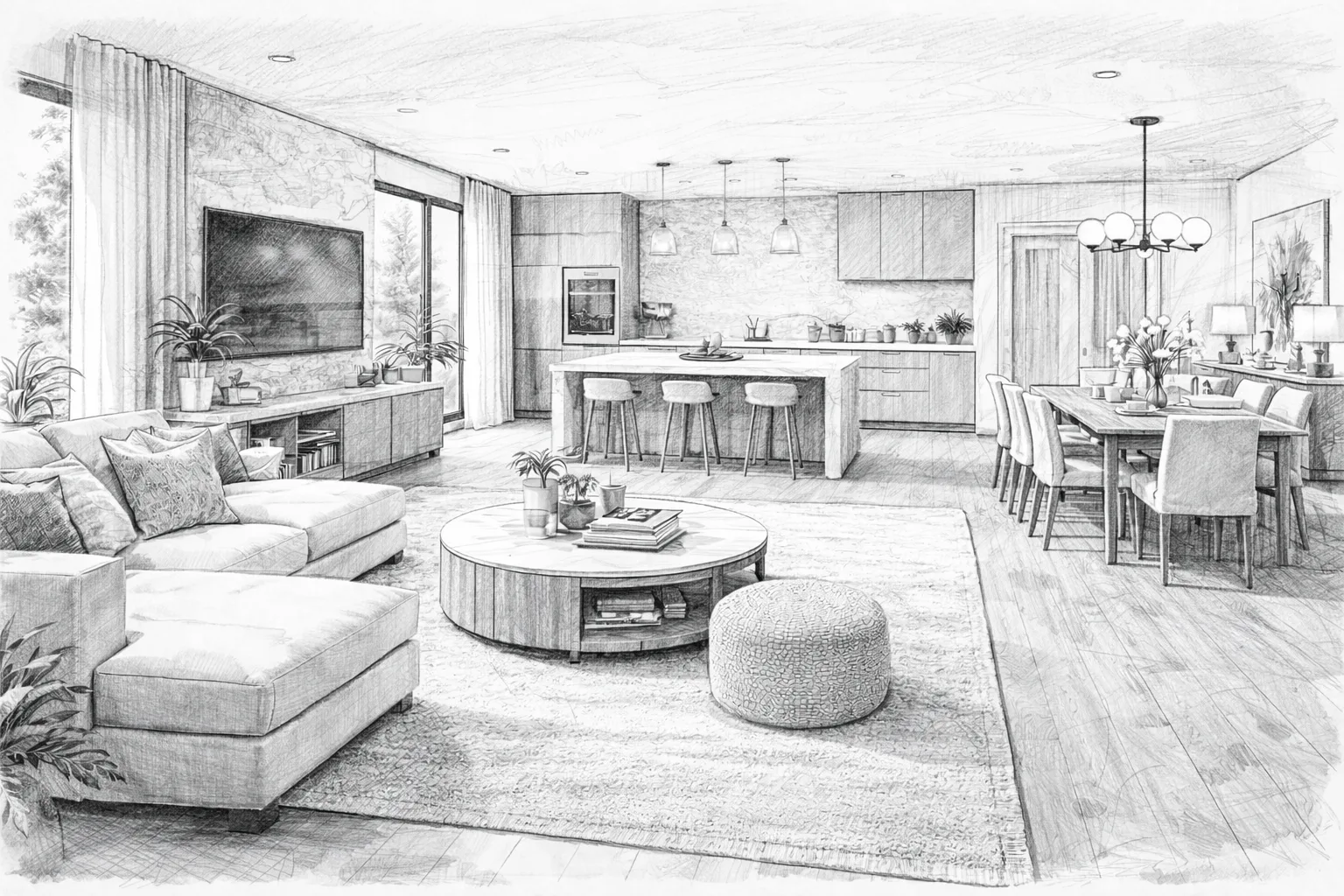
- NATA 2026 exam overview: Part A vs Part B, marking scheme, and how examiners evaluate drawings — with a personal time management plan built in the first session.
- Freehand sketching foundations: line weight, proportion, and architectural vocabulary — walls, openings, rooflines, stairways — built through structured warm-up exercises.
- Composition principles for A1 and A2: visual balance, rule of thirds, foreground-midground-background, and tonal contrast in B&W.
- Perspective drawing: 1-point and 2-point perspective applied to interior spaces and exterior building views, with emphasis on scale and depth.
- Week 1 timed drawing drill: a 90-minute composition simulation with individual faculty critique and a written assessment of each student's three priority areas for the remaining weeks.
- Understand how one model generates floor plans, elevations, sections, and 3D views simultaneously.
Week 2 - Colour, 3D Vision and Aptitude Ignition

- Colour theory and application for A1: warm and cool palettes, mood-based colouring, and rendering a given composition in colour within time.
- 3D composition thinking for A3: spatial forms, depth, object arrangement, and practising spatial logic through guided exercises using geometric solids.
- Visual and logical reasoning for Part B: pattern recognition, figure-ground reversal, series completion, and spatial analogy questions.
- Architecture GK and design awareness: landmark buildings, noted architects, Indian heritage structures, architectural movements, and current trends — with a 30-card personalised flashcard set built during self-study.
- Mock Test 1 — Full NATA Simulation: 90-minute drawing (A1 + A2 + A3) followed by 90-minute aptitude MCQ/NCQ, with a complete debrief and scored report.
- Create and name rooms — the foundation of every finish schedule and FF&E list.
Week 3 - Advanced Rendering, Reasoning and Speed
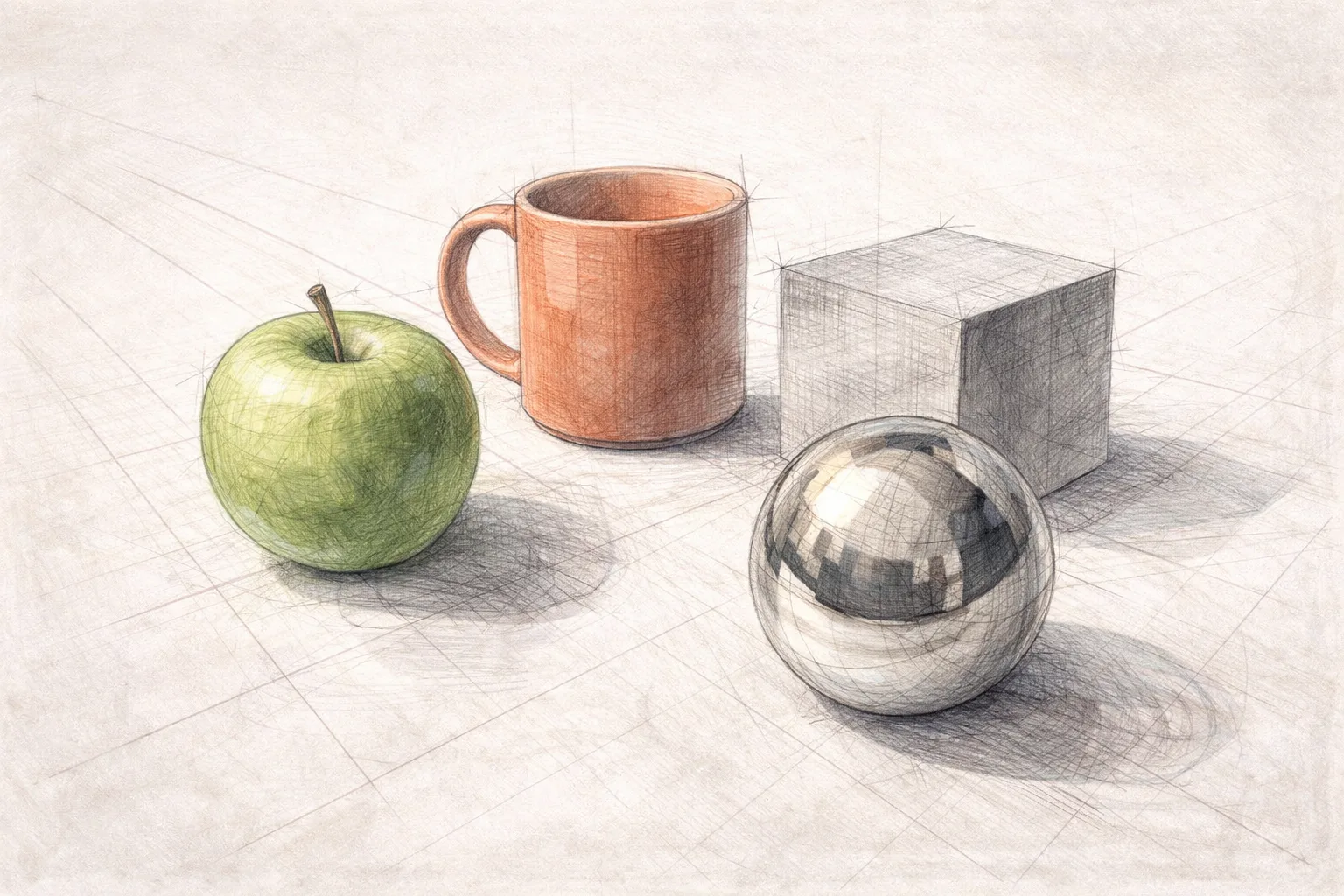
- Language interpretation and numerical ability for Part B: vocabulary analogies, grammar, and geometry and proportion applied to architectural design problems.
- Design sensitivity and thinking for Part B: semantic reasoning, metaphors in design, problem identification, and user-centred spatial thinking.
- Advanced rendering techniques: texture representation for brick, glass, wood, and concrete; shade and shadow; and human figures placed in architectural space.
- Situational composition masterclass: translating a written situation or narrative into a drawing — the skill that separates strong NATA candidates in the A2 section.
- Mock Test 2 — Full NATA Simulation with personalised score analysis and targeted feedback on both drawing quality and aptitude accuracy.
- Use the 3D section box to cut through your model and review interior spaces from any angle.
Week 4 - Exam Simulation, Strategy and Confidence

- Speed and accuracy drills: timed 15-minute composition sprints, high-speed MCQ practice, and a finalised exam-day routine and materials checklist.
- Past year question paper analysis: deep-dive into NATA 2023, 2024, and 2025 drawing tasks and aptitude trends, with examiner perspective on scoring logic.
- Portfolio thinking and B.Arch admission strategy: how NATA scores drive admissions, college shortlisting methodology, and the beginning of an application portfolio.
- Mock Test 3 — Final Full NATA Simulation: offline drawing followed by CBT aptitude, with complete scoring, peer comparison, and faculty analysis.
- Exam-eve masterclass and doubt-clearing session: rapid revision across all sections, live Q&A, mental preparation, and a final day-of-exam checklist reviewed with faculty.
- Use Design Options to show Client Option A vs. Option B within the same Revit file.


Learn through real-world, guided design projects
You will learn through live residential and Vastu-based design projects developed by ASDAV. Each project reflects real client requirements, site conditions, and execution challenges. You will apply design principles, space planning, and practical workflows while gaining industry-ready experience.


Tools we teach







How are we different?
Why choose ASDAV for your NATA preparation?
We don't just upskill you, we give you the tools to excel in your path.
Interactive Lectures
Some
No
Hands-on Workshops
Yes
No
Real-life Case Studies
Yes
No
Group Discussions and Feedback Sessions
Yes
No
Interactive Lectures
Some
No
Hands-on Workshops
Yes
Some
Real-life Case Studies
Some
Some
Group Discussions and Feedback Sessions
Yes
No
Real-life Case Studies
Some
Some
Group Discussions and Feedback Sessions
Yes
No
MEET THE HUMANS BEHIND ASDAV
We eat, learn, teach & repeat

Ar. Vijay P.
Architect | BIM Specialist
With 13+ years of experience across industry and academia, Vijay has led large-scale BIM projects like Nine Elms London, FIFA stadiums, and royal residences in Qatar. A CEPT alum and PhD scholar at IIT Roorkee, At ASDAV, he trains students to bridge the gap between practice and education through BIM.
Off duty, he’s a scale model collector and passionate photographer.

Ar. Aditya K.
Architect | Landscape Consultant
Aditya is a SPA Alum - landscape architect passionate about heritage, cultural spaces, and site-driven design. His work explores the sweet spot where history, ecology, and modern thinking meet.
At ASDAV, he helps students sharpen their ideas and design with clarity—encouraging them to question more, explain less.
Outside the classroom, you’ll find him jamming to music, and fuelling great conversations over chai.

Ar. Anuj K.
Architect | Interior Designer
Anuj is an architect with 5+ years of experience in residential, commercial interior design. As the Proprietor and Principal Designer of Base MUSC, he focuses on creating functional, well-planned spaces that balance aesthetics with everyday practicality.
At Base MUSC, he brings a thoughtful, detail-driven approach, ensuring each design meaningfully supports how people live and work.
When he’s not managing projects, he’s usually folding origami, exploring new trails, or going for a run to reset and recharge.

Ar. Shubham K
Architect | Sustainable Materials Advocate
Shubham is an architect with 5+ years of experience in architecture, product design, and brand strategy. He specialises in sustainable materials like bamboo, blending design with usability and commercial impact. At ASDAV, he brings sharp focus to execution, material thinking, and real-world design clarity.
When not designing, he’s usually trekking high-altitude trails or playing fetch with his dog.

Ar. Jasmine A
Architect | Global Vastu Consultant
Jasmine is an architect and global Vastu consultant with 8+ years of experience across design and teaching, including international work in architecture and interiors. Her approach blends architectural thinking, human-centered interiors, and practical Vastu.
At ASDAV, she leads with clarity, encouraging learners to design purposefully, and build meaningful careers with confidence.
When not mentoring students, she’s either bonding with dogs or finally finishing her first cup of coffee for the day.

Ar. Hitesh K
Furniture Designer | Interior Educator
Hitesh is a furniture and interior design professional with expertise in material-driven design, detailing, and production thinking. An NID graduate, he blends design craft with real-world execution.At ASDAV, he leads sessions on furniture design, spatial planning, and design software—helping students bridge ideas with execution through clarity, craft, and process.
When not teaching or designing, he’s deep into furniture case studies—or quietly redesigning the everyday.

Ar. Anushruti S
Landscape Architect | Urban Design Educator
Anushruti is a landscape architect with experience across real estate, urban infrastructure, and environmental design projects in India and Europe. At ASDAV, she helps students make sense of landscape and urban systems—focusing on critical thinking, environmental sensitivity, and scale-based design clarity.
When not mapping or mentoring, she’s out exploring green corners of the city and how people interact with them.

Ar. Meher T
Architect | Design + Construction Specialist
Meher is an architect with over 10 years of experience focused on the intersection of design vision and buildability. Her strength lies in translating conceptual ideas into precise construction drawings.
At ASDAV, she brings a practical lens to design education, helping students understand how ideas become structures.
Outside the studio, she’s obsessed with Travel and her harmonium.

Ar. Rayan M
Interior Architect | Global Design Consultant
Rayan is an interior architect with 9+ years of international experience across residential, commercial, and hospitality projects in the UAE, Italy, and Southeast Asia.
At ASDAV, he guides students through design detailing, spatial logic, and project workflows.
When he’s not teaching, you’ll find him exploring city backstreets, or hunting down the best De-cafe in town.
What Will You Gain Through This Course - Online Crash Course for NATA 2026

Drawing confidence you can feel in the exam hall.
You will complete Part A knowing exactly how to approach colour composition, B&W sketching, and 3D spatial arrangement. The techniques become automatic because you have practised each type under timed conditions, with faculty feedback, every single week.

A strategy that accounts for every minute of the exam.
NATA is not just about knowing the answers — it is about knowing how to allocate your time. You will learn how to pace Part A drawing tasks within 90 minutes and manage Part B's 50-question adaptive section where every second counts.

Three benchmark scores to track your progress.
Each of the three full-length NATA mock tests produces a scored result with detailed section-wise analysis. You will know where you stand at the end of Week 2, Week 3, and Week 4 — not on exam day.

An architecture GK foundation built to last.
The general knowledge sessions cover landmark buildings, Indian heritage architecture, building materials, climate-responsive design, and contemporary trends — content that directly appears in NATA Part B and remains useful throughout a B.Arch degree.

A B.Arch college shortlist grounded in your NATA score.
Week 4 includes a dedicated session on how NATA scores translate into B.Arch admissions — which colleges accept NATA, what additional criteria they apply, and how to prioritise your application list based on realistic score projections.

An ASDAV course completion certificate.
Issued digitally and shareable on LinkedIn, your portfolio, or your CV — confirming that your NATA preparation was structured, live, and faculty-supervised.
Enroll Now for the NATA 2026 Crash Course
Join the focused, 4-week NATA preparation programme. Live sessions every weekday, 3 full-length mock tests, personalised drawing feedback, and 30 days of post-course support. Batch sizes are limited.
- All 4 weeks of live sessions (30 hours)
- Recorded sessions for revision
- 3 full-length NATA mock tests with scored debriefs
- Personalised drawing feedback every week
- ASDAV Course Completion Certificate
- 30-day post-course WhatsApp support


Attain Industry-Recognized Certificate
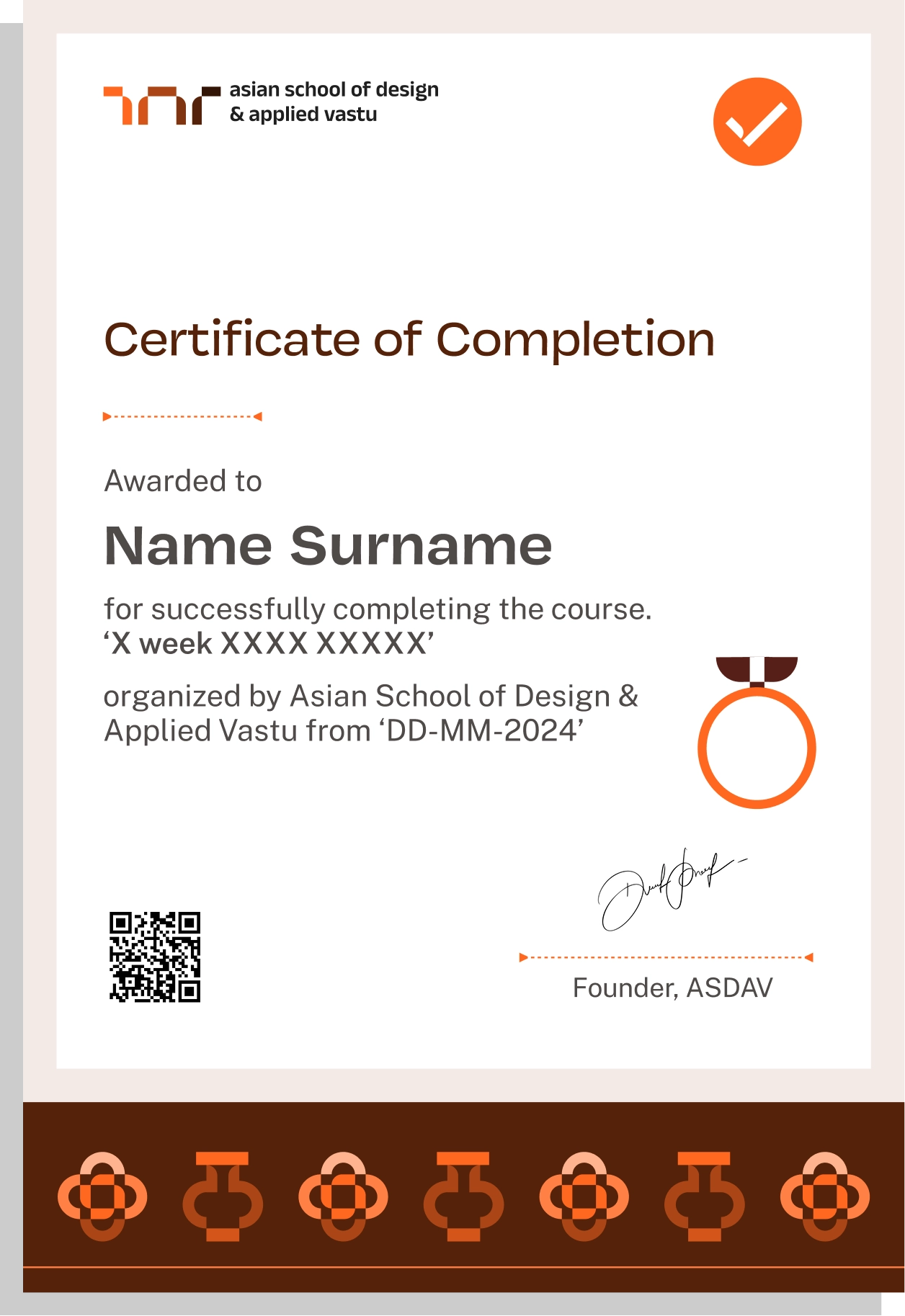
Earn Industry-Recognized Certification through Our Advanced Course, in Partnership with Google for Education, Elevating Your Career Profile
Easily sharable PDF document on LinkedIn, portfolio, resume or CV.


TAUGHT BY INSTRUCTORS FROM












ALUMNI GROWTH STORIES
Where our learners grow, lead & succeed






TESTIMONIALS
Your love inspires us, every minute. Inspirational Words Shared by Our Members
ASDAV's classes have empowered countless students to bridge theoretical knowledge with practical industry application.
Our community of passionate learners, where exploration knows no bounds.
Shavi Gupta


I am a practicing interior designer and when I got to know about their Vastu course, I immediately enrolled myself in it. They taught me practical Vastu and gave me several case studies to practice. I 100% recommend ASDAV’s Vastu course to everyone in the field.
Himanshi Rawat

Even though I studied design, I wasn’t confident with real interior designing tasks. At ASDAV, the trainers explained everything step by step. I built a complete portfolio with detailed floor plan, 3D views, and material palette. That portfolio helped me get my first interview.
Nikkita Bisht


I joined ASDAV’s masterclass because I wanted to design something that was accessible for everyone. The class taught me ramp gradient, turning radius, door clearance, and accessible bathrooms. I applied this to a community center project, and my client appreciated me a lot.
Aekeshwar Saxena

In practice, we are expected to design fast and think clearly, but college never really prepared me for that. ASDAV’s session helped me sharpen my decision making from site analysis to layout logic. It’s one of the few platforms that really understand how real-world architects work.
Jai Singh


Taking classes in ASDAV for Vastu has been a great experience. It wasn’t just about tradition, it’s about how spaces feel, how they function, how they can affect us. Even being a student in London, it has added a lot more depth to my approach.
NEED SOME HELP?
Here are some frequently asked questions
How is this course structured week by week?


The course runs over 4 weeks with live sessions every weekday, each 1.5 hours long — totalling 30 hours of guided instruction.

Are the sessions live or pre-recorded?
All sessions are live and instructor-led. Recordings are available within 24 hours.
How much time should I set aside each week outside of class?
Approximately 2.5 hours of independent practice per week alongside 7.5 hours of live sessions.
Is there a final project or assessment?
Three full-length timed mock tests across the four weeks, each followed by a personalised score report and faculty debrief.
What happens if I miss a live session?
All sessions are recorded and shared within 24 hours. Bring questions to the next class or course WhatsApp group.
Do I receive any support after the course ends?
Yes. 30 days of post-course support via WhatsApp.
I have never prepared for NATA before. Is this course enough?
This course covers all three Part A question types and all six Part B domains from the ground up.
How does this course improve my Part A drawing score?
Through daily timed drawing exercises, systematic technique drills, and personalised faculty critique on every major drawing.
What materials do I need for the drawing sessions?
A3 drawing sheets, pencils (HB, 2B, 4B), eraser, sharpener, and a basic set of colour pencils or poster colours.
Will I get individual feedback on my drawings?
Yes. Every week includes a one-on-one drawing feedback session with the instructor.
What types of drawing questions does NATA ask?
Part A includes: A1 — colour composition, A2 — B&W sketching, A3 — 3D spatial arrangement.
I can draw reasonably well already. Will this course still help me?
Yes. The course focuses on examiner expectations, strategic time allocation, and NATA-specific scoring.
How does the course prepare me for the 108-second-per-question rule?
Through repeated timed MCQ drills building from untimed practice to 90-second-per-question simulations.
I am not confident in my architecture GK. Is there a structured approach?
Yes. Dedicated GK session plus a 30-card personalised flashcard set of landmark buildings and architects.
Are there practice materials for Part B included?
Yes. PDF question packs, curated GK reference notes, and formula sheets — all calibrated to NATA 2026.
How is NATA's adaptive NCQ format different, and does the course cover it?
NCQ questions are computer-adaptive. Weeks 3 and 4 mock tests include NCQ-format questions.
How does Revit change the way I present to clients?
Instead of hand sketches or static renders produced in a separate tool, Revit lets you generate 3D views, walkthroughs, and photorealistic renders directly from your live model. Any design change is reflected across every view immediately – so client presentations become faster, more accurate, and visually far more compelling.
Is Revit used differently by interior designers and architects, and does this course address that?
Yes, and this is precisely what sets this course apart. The workflows architects use in Revit – structural grids, MEP coordination, massing – are entirely different from what interior designers need. This course was built around interior design practice from the ground up: space planning, casework, materials, finish schedules, interior elevations, and FF&E documentation.
How are the live sessions conducted?
Online via video conferencing. Instructor demonstrates on screen while students practise in real time.
Can I interact directly with the instructor during class?
Yes. Every live session includes dedicated time for questions and direct feedback.
Is the batch size small enough for individual attention?
Yes. ASDAV limits batch sizes for meaningful feedback on weekly drawings and mock test performance.
What if I want to move faster than the weekly structure?
Recordings are accessible from Week 1. The instructor is also available in the course WhatsApp group.
Is there a community or peer group?
Yes. All students join a cohort group for sketch sharing, questions, and peer feedback.
Are sessions scheduled for school students?
Timings are confirmed with each batch and designed around school timetables.
What is the minimum eligibility for NATA 2026?
Class 10+2 with Mathematics and minimum 50% aggregate. Current Class 12 students can also register.
I am a NATA repeater. Will this course add value?
Significantly. Mock test structure benchmarks score improvement and targeted drawing feedback identifies where marks are lost.
Does this prepare me for JEE Main Paper 2 (B.Arch)?
Drawing and aptitude skills are transferable. JEE Paper 2 Mathematics section is not covered.
What happens after I get my NATA score?
Week 4 covers B.Arch college shortlisting — how scores translate to admissions and application priorities.
Will the ASDAV certificate be useful in my application?
Yes. Confirms structured, live, faculty-supervised preparation — meaningful for portfolio reviews.
How do I enrol?
Visit asdav.in > Architecture Courses > NATA Crash Course 2026. Write to hello@asdav.in or call +91-9217141316.