Architecture blends creativity, technical knowledge, and digital tools to design buildings and built environments. For architects and design students, learning Building Information Modeling (BIM) tools such as Revit has become essential in modern architectural practice.
The right training program can help learners understand modeling, documentation, and project coordination used in professional firms. Today, many institutes and online platforms offer Revit courses in various formats and levels of depth.
In this listicle roundup, we see the 5 best Revit courses and certifications for 2026 that help learners develop practical BIM skills.
👉 See the complete curriculum, tools, and real project workflow you will learn to build practical BIM skills step by step.
Download the Revit and BIM Course Syllabus.
6 reasons Architects should master Revit
1. Revit Is the Standard Tool in Modern Architecture
Architecture firms today rely heavily on Building Information Modeling (BIM) to design and manage projects. Revit is one of the most widely used BIM tools in the architecture, engineering, and construction industry.
Instead of creating separate drawings, architects work inside a single intelligent model that contains building geometry, materials, and project data. This approach makes design coordination easier and reduces confusion between different teams. Because many firms now follow BIM-based workflows, learning Revit has become an essential skill for architecture students and professionals.
2. You Can See Your Design in 3D Before Construction
Revit allows architects to create detailed 3D building models that show how a project will actually look and function. This makes it easier to visualize spaces, test design ideas, and communicate concepts clearly.
Architects can generate renders, walkthroughs, and presentation views directly from the model. Clients and stakeholders can understand the design faster because they see the building instead of trying to interpret 2D drawings. Better visualization leads to better feedback and more confident design decisions.
3. Design Changes Become Much Easier to Manage
Architectural projects change constantly during the design process. Revit uses parametric modeling, which means all building elements are connected inside the model.
If an architect changes a wall height, related elements such as doors, windows, and levels update automatically. This reduces manual work and helps maintain consistency across the entire project. Instead of fixing multiple drawings one by one, architects can focus more on improving the design.
4. Revit Speeds Up Architectural Documentation
Producing architectural drawings takes a lot of time in traditional workflows. Revit simplifies this process by generating drawings directly from the BIM model.
Floor plans, elevations, sections, schedules, and details stay connected to the model. When the design changes, the drawings update automatically. This helps architects maintain accurate documentation and deliver coordinated drawing sets faster.
5. Better Project Data and Decision Making
Revit does more than create drawings. The BIM model also stores project data such as materials, quantities, and building components.
Architects can generate schedules, material quantities, and project reports directly from the model. This information helps teams make smarter decisions during the design stage. Better data management also improves planning, cost control, and project tracking.
6. Revit Skills Improve Career Opportunities
Many architecture firms now expect architects to understand BIM tools such as Revit. Job listings for architects often include Revit knowledge as a required skill.
Learning Revit helps architects work on larger and more complex projects. It also improves portfolio quality because architects can present detailed models, coordinated drawings, and professional documentation.
Infact, for architecture students and young professionals, Revit skills often make the difference when applying for jobs in the AEC industry.
Find the top online Revit certification courses for 2026
1. Online Revit Certification Program For Architects by ASDAV
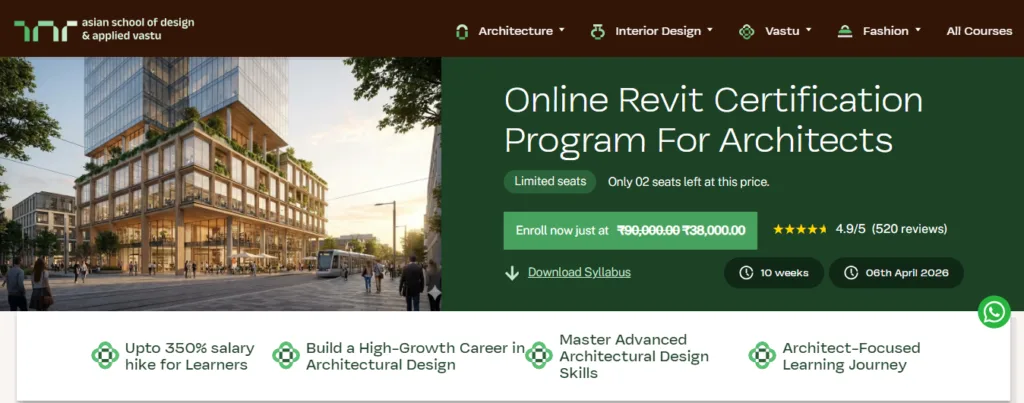
Pricing: ₹38,000 (limited-time discounted fee)
Course mode: Cohort-based live online classes with instructor-led sessions
Online Revit Certification Program For Architects by ASDAV is one of the best Revit courses & certifications for 2026 for architects who want to build real BIM and architectural modeling skills used in modern design firms. This 10-week live online program teaches you how to develop complete architectural projects in Revit, from concept modeling to construction-ready drawings and documentation.
The course uses direct feedback from experienced architects trained at institutes such as IIT, NID, SPA, and CEPT, ensuring practical, industry-focused learning.
You learn how to model walls, floors, roofs, stairs, and site elements, create smart parametric families, and manage schedules, sheets, and coordinated drawing sets. The course also introduces worksharing, clash coordination, and cloud collaboration used in professional BIM workflows. Students will receive an ASDAV completion certificate and lifetime access to course resources.
Learning happens through 40+ live sessions, one-on-one mentoring, cohort discussions, and 20+ real architectural case studies. More than 2,000 AEC professionals have already been trained with ASDAV, and the program holds a strong rating so that you can trust us.
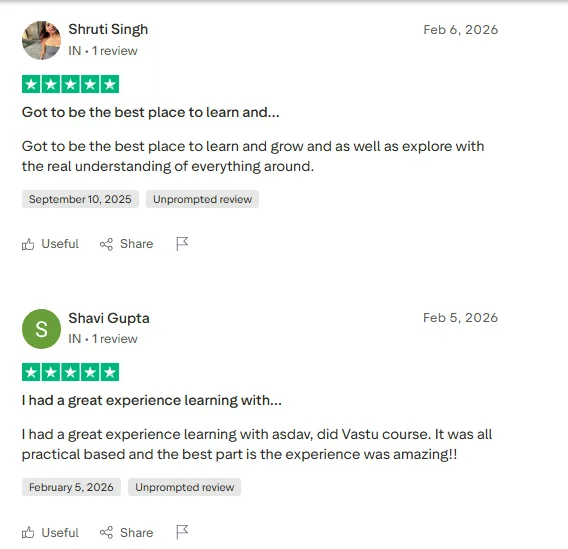
Here’s what our learners say about their experience at ASDAV.
2. Revit for Beginners by ArchAdemia
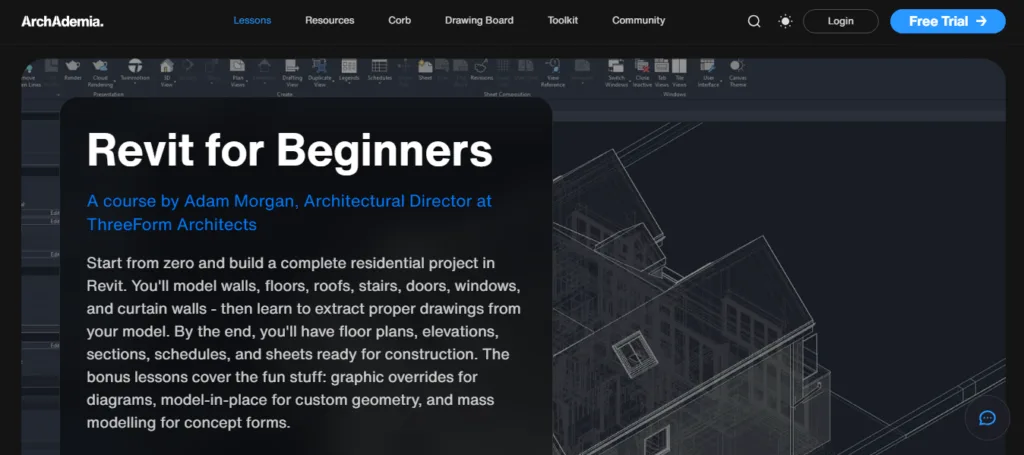
Price: Included with ArchAdemia membership (starts around $39/month) with a 7-day free trial and access to 60+ architecture courses.
Course mode: Online video lessons
Revit for Beginners by ArchAdemia introduces the fundamentals of BIM-based architectural modeling through a hands-on residential project. The course includes 20 guided lessons and over 7 hours of training, during which learners gradually build a complete house model in Revit. You start with project setup, levels, and wall modeling, then move into roofs, stairs, curtain walls, doors, windows, and site elements.
Later lessons focus on documentation workflows, including views, room tagging, schedules, annotations, sheets, and drawing exports. The program also explores parametric modeling, custom families, model-in-place geometry, and mass modeling techniques. By the end, students understand how to generate coordinated plans, sections, and elevations directly from a BIM model used in real architectural practice.
3. Revit Architecture Online Course by Civilera
Pricing: ₹7,499 for the self-paced plan with one year of access
Course mode: Online
The Revit Architecture Online Course by Civilera focuses on teaching BIM fundamentals and architectural modeling using Autodesk Revit. The training starts with the basics, such as interface navigation, views, families, and core modeling tools, then moves into advanced workflows, including building layouts, detailing, and documentation.
The syllabus also covers worksharing, interdisciplinary coordination, linking models, and material quantification, which are key parts of BIM-based project workflows. Learners practice complete architectural modeling of a building, including sketching, layout preparation, and detailing. The course is delivered in a self-paced format with video tutorials, exercises, downloadable resources, and email or Zoom support, making it suitable for both students and working professionals.
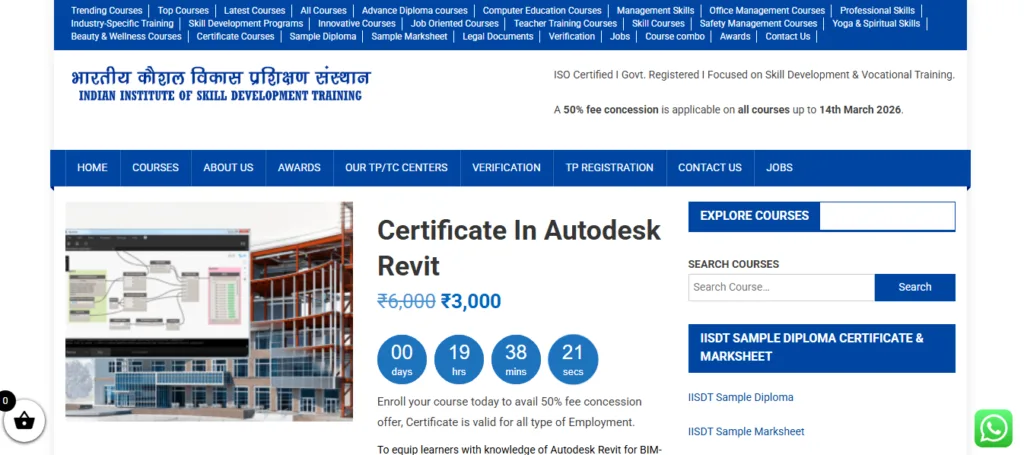
4. Certificate in Autodesk Revit by IISDT
Pricing: ₹3,000 (discounted from ₹6,000)
Course mode: Online self-paced learning
The Certificate in Autodesk Revit by IISDT introduces learners to the core workflows used in modern architecture and construction projects. The program starts with the basics of the Revit interface, project setup, views, families, levels, and grids, helping students understand how BIM projects are structured.
As the course progresses, learners practice architectural modeling, including walls, floors, roofs, stairs, curtain walls, and site design. The syllabus also covers structural elements, MEP systems, parametric family creation, and BIM coordination workflows. By the end of the program, students understand how to build detailed 3D building models and generate construction documentation directly from Revit.
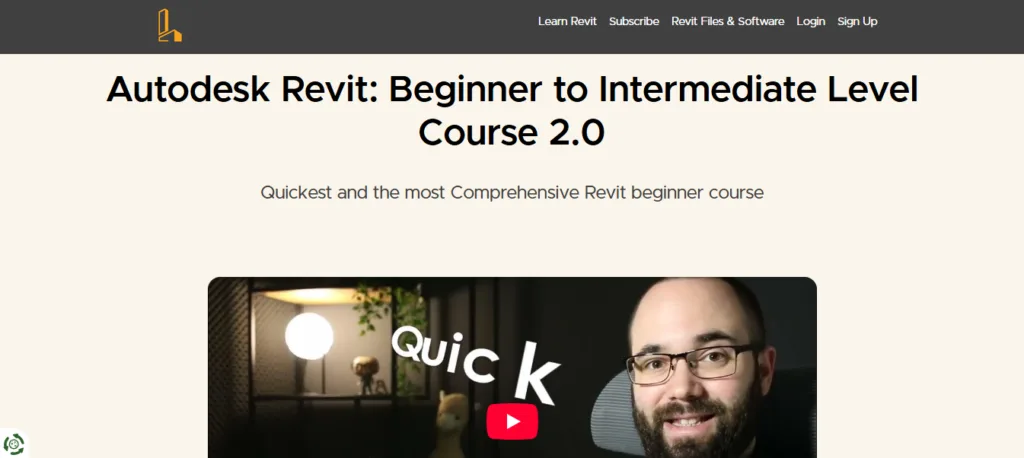
5. Autodesk Revit: Beginner to Intermediate Level Course 2.0 by Balkan Architect
Pricing: $149 (Basic), $199 (Premium), $249 (Elite)
Course mode: Online self-paced video training
The Autodesk Revit Course 2.0 by Balkan Architect focuses on learning Revit through project-based training. Instead of only explaining tools, the course walks learners through four complete projects that demonstrate how BIM workflows are applied in real architectural work.
Students explore topics such as detailing tools, annotation and tagging, automated schedules, legends, and different Revit view types used for documentation. The training also explains how to create presentation-ready 3D views and coordinated drawing sets directly from the model. Premium tiers include an 18-chapter knowledge base, consultation sessions, templates, and live group sessions, providing learners with deeper support as they develop practical Revit skills.
What is the duration of Revit course?
The duration of a Revit course varies depending on the institute, learning format, and curriculum depth. Short beginner programs may take a few weeks, while more comprehensive BIM-focused courses usually run for 8 to 12 weeks. Some platforms also offer self-paced training, where learners can progress through the lessons at their own pace.
In structured programs such as ASDAV’s Revit Certification Program, the course typically runs for around 10 weeks with live sessions, guided projects, and assignments that help students gradually build modeling, documentation, and BIM coordination skills used in real architectural workflows.
What makes ASDAV’s Revit Certification Program different from others
ASDAV’s Revit Certification Program is built around practical BIM learning that reflects how architectural teams work on real projects. Rather than focusing only on software features, the course connects Revit skills with architectural workflows such as modeling, coordination, and construction documentation. Learners understand how BIM supports the entire design process, from early concepts to detailed project drawings.
Key aspects that set the program apart:
- Real project learning where students develop residential models and documentation similar to actual client work.
- Guidance from practicing architects who bring experience from architecture, interiors, BIM, and built projects.
- Step-by-step Revit training that covers modeling, parametric families, visualization, and documentation workflows.
- Case studies that demonstrate how BIM tools help solve real design and coordination challenges.
- Small cohort sessions with discussions, reviews, and mentor feedback during the learning process.
- Career-oriented training that helps learners build portfolios and gain confidence using Revit in professional environments.
👉 Enroll in the program or download the syllabus to see the full course curriculum and learning outcomes.

Jasmine Ahluwalia is a Licensed Architect, Interior designer, Global Vastu consultant and the founder of ASDAV.
She is a graduate of Scuola Master F.lli Pesenti, Politecnico di Milano, and brings strong global exposure through academic learning and professional design projects. Her background combines architecture, interior design, and applied design education.
Before founding ASDAV, Jasmine worked as an assistant professor at Amity School of Architecture and Planning, Amity University Noida. Her research covers sustainable architecture, urban heat island reduction, and circular economy practices in construction. Her work has been published in Scopus indexed and peer reviewed journals as well. She also has strong international on-site experience from countries like Canada, Mauritius, UK, and many more.
Through ASDAV, she has trained more than 500 students across 25 cities. The ASDAV platform has 12+ instructors from IIT, SPA, CEPT and NID , and has delivered over 200 live learning sessions. Her mission is to bridge the gap between design education and real industry expectations, to deliver real growth for her students.
She designs spaces for a living, but her favourite project is designing careers.