Architecture combines creativity, engineering, and technology to design spaces that shape how people live and interact with their environment.
Whether you want to become a professional architect or learn architectural design tools, the right course can help you build essential skills. Today, many institutions and online platforms offer architecture courses covering design principles, BIM software, visualization, and professional practice.
In this listicle guide, we explore 7 of the best architecture courses that can help students, designers, and aspiring architects develop practical industry skills and advance their careers.
👉Explore the full curriculum, tools, and real project workflows to build practical architecture skills and choose the right course for your career.
Download the Revit and BIM Course Syllabus.
1. Revit Architecture and Fundamentals of BIM by ASDAV
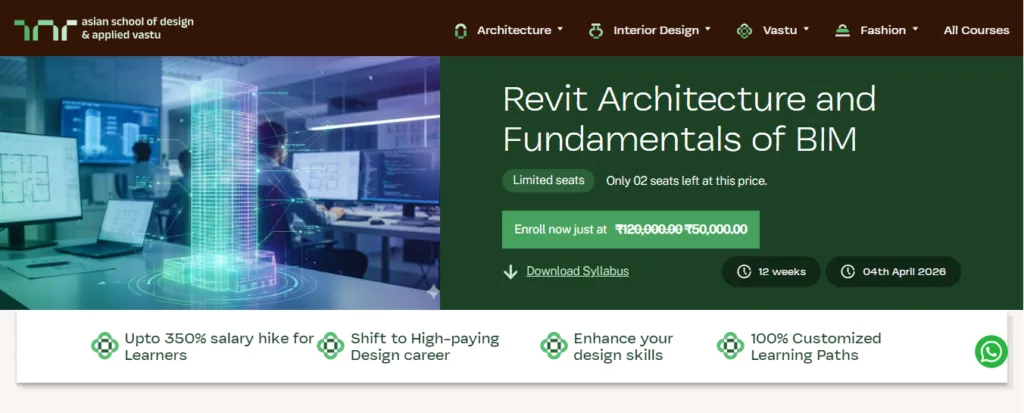
Pricing: ₹50,000 (discounted price for a limited period)
Course mode: Cohort-based live online classes with instructor-led sessions
The Revit Architecture and Fundamentals of BIM by ASDAV is one of the best architecture courses for learners who want to master modern BIM workflows used in professional architecture firms.
The program is designed for architecture students, architects, interior designers, fresh graduates, and BIM beginners who want practical design and documentation skills. Learners work on real architectural projects while mastering Revit from concept modeling to construction drawings.
The course uses live interactive classes, small cohorts, and direct feedback from experienced architects trained at institutes such as IIT, NID, SPA, and CEPT.
As of now, over 2,000 AEC professionals have already trained with ASDAV, and many learners report strong career growth and major salary hikes after completing the program.
You will also learn a course completion certificate recongnized by industry:

Here is what our students say about their experience at ASDAV:

👉 Learn more about ASDAV, your trainers, and how we help transform your career with live training courses.
👉 Enroll in this course: Professional Revit & BIM Course For Architects
2. Autodesk Maya for Architecture — ArchAdemia
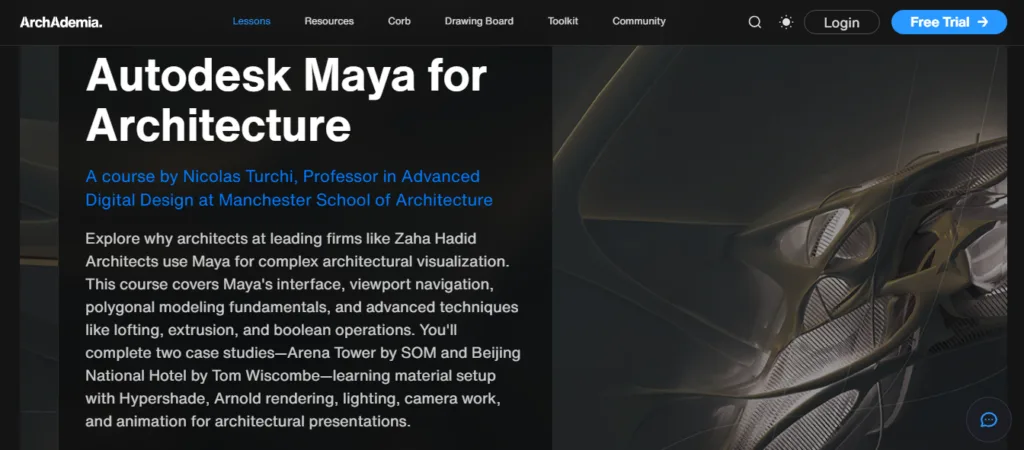
- Pricing: Included in ArchAdemia membership (£159 per year)
- Course mode: Online self-paced video lessons
The Autodesk Maya for Architecture course by ArchAdemia teaches architects how to create complex architectural models and visualizations using Maya. The curriculum explains Maya’s interface, navigation, polygonal modeling, mesh editing, and advanced modeling techniques such as extrusion, lofting, and boolean operations.
Two architectural case studies, including Arena Tower by SOM and Beijing National Hotel by Tom Wiscombe, help learners practice real building modeling and visualization workflows. Lessons also cover Arnold rendering, HDRI lighting, material creation, and animation for architectural presentations.
The membership also unlocks access to 60+ additional architecture courses covering Revit, AutoCAD, Rhino, SketchUp, parametric design, visualization, portfolio creation, and architectural practice tools.
3. The Architectural Imagination — Harvard University
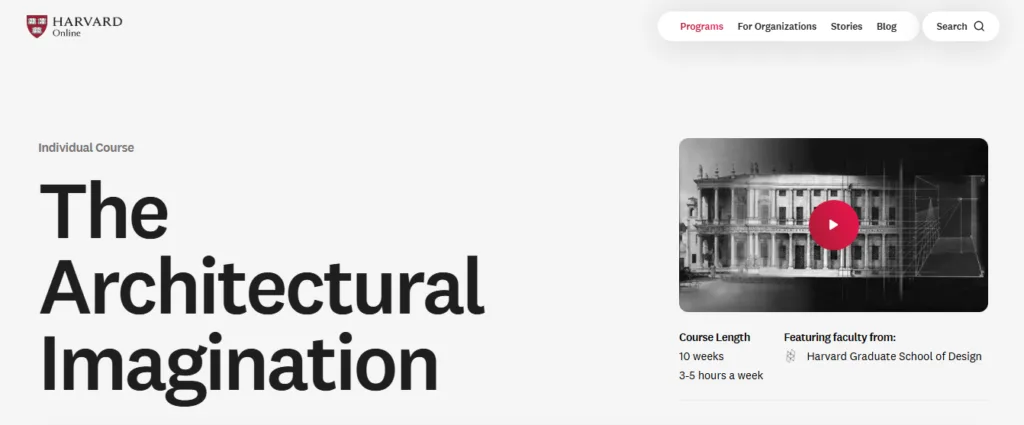
- Pricing: $249 for verified certificate (free audit option available)
- Course mode: Online self-paced learning on edX
The Architectural Imagination by Harvard University introduces learners to the fundamental ideas that shape architecture as both a cultural and technical discipline. Harvard Graduate School of Design faculty guide students through the analysis of influential buildings while explaining architectural drawing, modeling, and the interpretation of design.
The curriculum explores architectural representation, building typologies, and the relationship between architecture, technology, and society. Learners also study how historical context, materials, and technological innovations influence architectural design.
Hands-on exercises in drawing and modeling help students understand how architects think, communicate ideas, and translate cultural values into built form. The course suits beginners, architecture enthusiasts, and students exploring architectural studies.
4. Bachelor of Science in Design in Architectural Studies — Arizona State University

- Pricing: Tuition varies based on credit hours and residency
- Course mode: Online degree program
The Bachelor of Science in Design in Architectural Studies from Arizona State University provides a comprehensive foundation in architectural design, theory, and digital representation. The program includes 38 courses that combine conceptual learning with project-based studio work.
Students study architectural drawing, spatial design, model making, and digital design tools while exploring sustainability, urban context, and cultural influences in architecture. Studio courses such as Architecture Project I to VI and advanced architecture studios help learners apply design thinking to real projects.
The curriculum also builds skills in research, collaboration, and visual communication, preparing graduates for roles in architecture, design, and related creative industries.
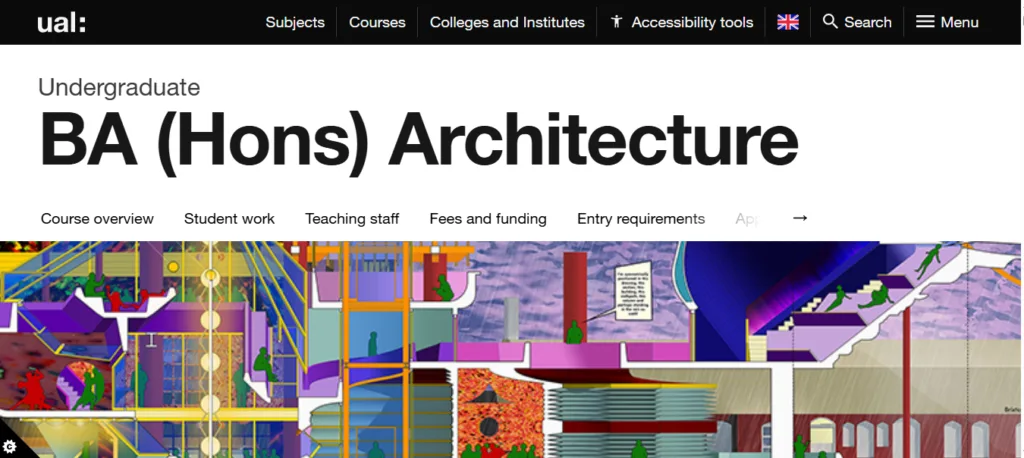
5. BA (Hons) Architecture — Central Saint Martins, University of the Arts London
- Pricing: £9,790 per year (UK students) / £30,890 per year (international students)
- Course mode: Full-time on-campus degree program (3 years)
The BA (Hons) Architecture at Central Saint Martins explores how architecture shapes social interaction, culture, and the built environment. The three-year program combines studio-based design learning with technical studies, architectural theory, and contextual research.
Students work on live projects with industry partners and community organizations while developing skills in spatial design, model making, drawing, and digital representation. The curriculum includes design studios, environmental and technical studies, and a final design thesis project.
The course is validated by the Royal Institute of British Architects (RIBA) at Part 1 level, preparing graduates for advanced architecture studies and careers in architectural practice.
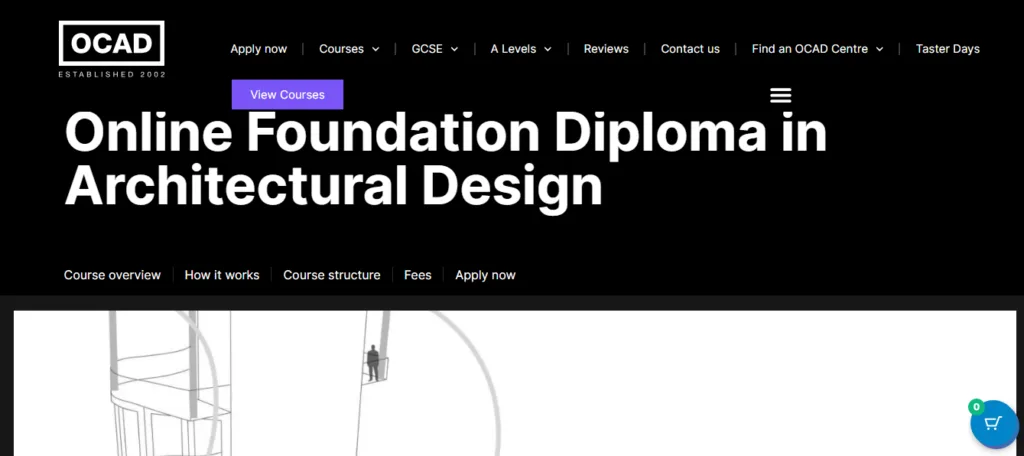
6. Online Foundation Diploma in Architectural Design — OCAD
- Pricing: £3,999 (UK) / £4,999 (international students)
- Course mode: Online (full-time or part-time)
The Online Foundation Diploma in Architectural Design by OCAD prepares students for university-level architecture education and early design careers. The program focuses on practical architectural design skills, portfolio development, and creative exploration across art and spatial design disciplines.
Students progress through three structured stages: exploratory learning across multiple design fields, a focused pathway stage in architecture, and a final confirmatory project that defines their personal design direction. The curriculum emphasizes drawing, visual communication, materials exploration, and conceptual design thinking.
Graduates earn a Level 3 diploma accredited by SEG ABC Awards and gain UCAS points that support entry into architecture and design degree programs.
7. Bachelor of Architecture Online Degree — Dunwoody College of Technology

- Pricing: Tuition varies by semester and credit requirements
- Course mode: Online degree program
The Bachelor of Architecture Online Degree from Dunwoody College of Technology provides a practice-focused pathway for students seeking licensure as architects. The program follows a five-year structure that includes a two-year associate degree followed by a three-year Bachelor of Architecture completion program.
The curriculum combines studio-based design, architectural theory, digital representation, and fabrication techniques. Students work on real design-build projects while learning topics such as site analysis, global architectural history, material studies, and professional practice.
Accreditation by the National Architectural Accrediting Board and participation in the Integrated Path to Architectural Licensure initiative allow students to complete the required experience for licensure while studying.
What is the duration of the architecture course?
Architecture courses can last from a few weeks to about 5 years, depending on the type of program. Short skill-based courses, such as BIM or architectural software training, usually take 8 to 12 weeks, while foundation programs may run 6 to 12 months.
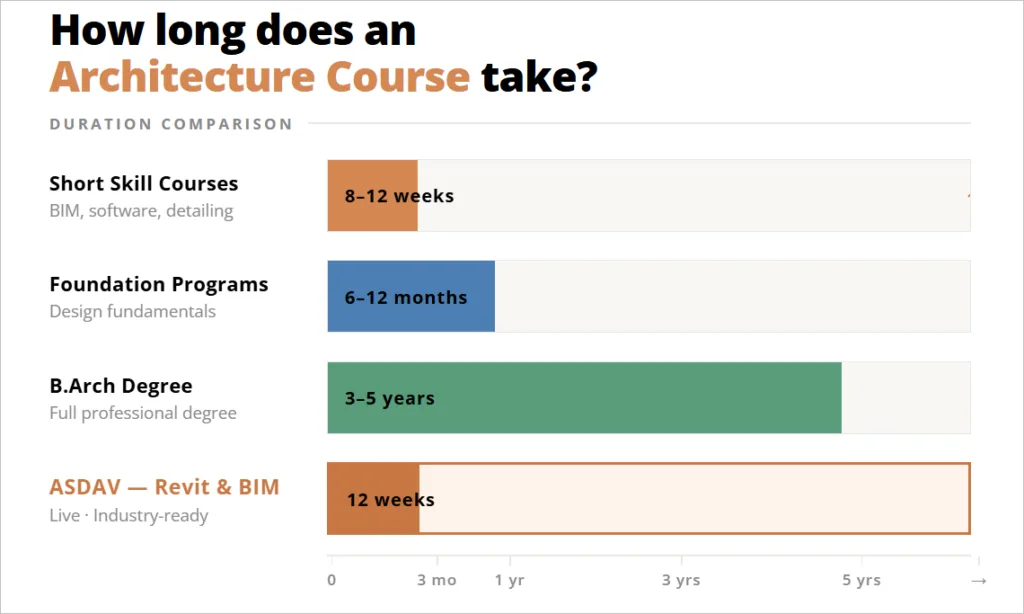
A full Bachelor of Architecture (B.Arch) degree generally takes 3 to 5 years. If you want practical industry skills faster, the Revit Architecture and Fundamentals of BIM course by ASDAV helps you learn BIM workflows and architectural documentation in 12 weeks of live training.
⭐ What makes ASDAV’s architecture courses different from others
ASDAV’s architecture courses focus on practical learning that prepares students for real design work. Instead of only teaching software or theory, the programs combine design thinking, technical skills, and real project workflows. Students learn how architecture works in professional studios, from concept development to documentation and execution.
In fact, our courses are led by experienced architects who have worked on global projects, which helps learners understand industry expectations and real world challenges.
What makes ASDAV different:
- Practice focused learning through real residential and design projects that reflect real client requirements.
- Industry experienced mentors who bring practical knowledge from architecture, interiors, BIM, and landscape projects.
- Hands on training with tools such as Revit and AutoCAD along with real documentation workflows.
- Case study based learning that helps students understand real design problems and solutions.
- Collaborative learning environment with group discussions, feedback sessions, and mentorship.
- Career focused approach that helps students build portfolios, gain confidence, and prepare for professional roles.
This approach helps learners develop strong design thinking, technical skills, and practical knowledge needed to succeed in architecture and design careers.
👉 Join the course or download the syllabus to explore the complete curriculum.

Jasmine Ahluwalia is a Licensed Architect, Interior designer, Global Vastu consultant and the founder of ASDAV.
She is a graduate of Scuola Master F.lli Pesenti, Politecnico di Milano, and brings strong global exposure through academic learning and professional design projects. Her background combines architecture, interior design, and applied design education.
Before founding ASDAV, Jasmine worked as an assistant professor at Amity School of Architecture and Planning, Amity University Noida. Her research covers sustainable architecture, urban heat island reduction, and circular economy practices in construction. Her work has been published in Scopus indexed and peer reviewed journals as well. She also has strong international on-site experience from countries like Canada, Mauritius, UK, and many more.
Through ASDAV, she has trained more than 500 students across 25 cities. The ASDAV platform has 12+ instructors from IIT, SPA, CEPT and NID , and has delivered over 200 live learning sessions. Her mission is to bridge the gap between design education and real industry expectations, to deliver real growth for her students.
She designs spaces for a living, but her favourite project is designing careers.